

America 250: How American Privateers Beat the World’s Strongest Navy

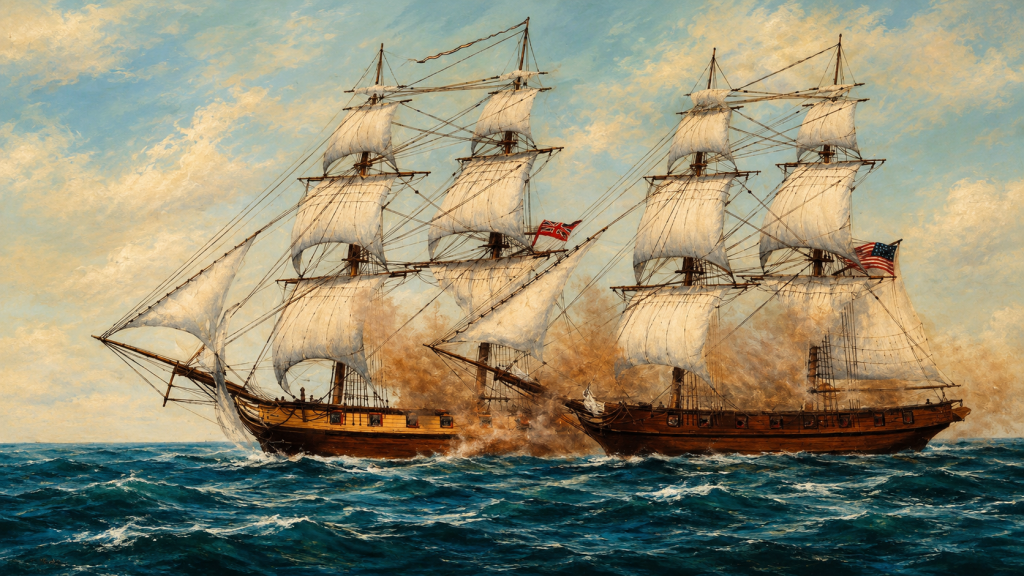
As the United States of America approaches its 250th anniversary, a new commentary by veteran investment executive Laurence Allen draws lessons from one of the Revolutionary War’s most unconventional success stories — and argues they remain highly relevant for modern business leaders, investors and entrepreneurs.
In “How American Privateers Beat the World’s Strongest Navy — and What That Means for Your Business,” Allen examines how the fledgling American colonies challenged the British Empire during the Revolutionary War despite lacking a formal naval force.
At the outbreak of the war, Britain commanded roughly 270 warships and operated the world’s most powerful navy. The American colonies, by contrast, had little naval capacity. Yet American privateers — privately owned ships authorized to attack British commercial vessels — captured an estimated 2,200 British merchant ships during the conflict, creating significant economic and political pressure on Britain.
Allen’s commentary argues that the privateers’ success stemmed not from size or resources, but from strategic discipline, agility and incentive alignment.
The piece outlines several key principles behind their effectiveness, including identifying vulnerable but high-value targets, avoiding direct confrontations with stronger adversaries, leveraging speed and flexibility as competitive advantages, and using reputation and psychological pressure to influence outcomes.
Allen also highlights how privateering relied on decentralized networks rather than centralized infrastructure, enabling smaller operators to extend their reach efficiently while aligning financial incentives directly with performance.
The commentary profiles several notable privateers, including Jonathan Haraden, John Ordronaux and the Rhode Island privateer Yankee, presenting them as examples of how disciplined execution and unconventional strategy can allow smaller competitors to outperform much larger rivals.
Beyond its historical analysis, the article positions privateering as a framework for modern organizations navigating industries increasingly shaped by consolidation and scale.
Allen has spent more than three decades in executive leadership roles overseeing trading and investment management teams focused primarily on alternative assets. He is recognized for his work in developing secondary market liquidity for alternative assets, private debt, mortgages and retirement planning, and has advised institutional investors, private funds and family offices globally.
He earned a bachelor’s degree in economics with honors and an MBA in finance from the Wharton School of the University of Pennsylvania. He also completed the Private Equity & Venture Capital Executive Education Program at Harvard Business School.