
Balyasny Closes $37 Billion Hedge Fund to New Capital After 2.7% Loss

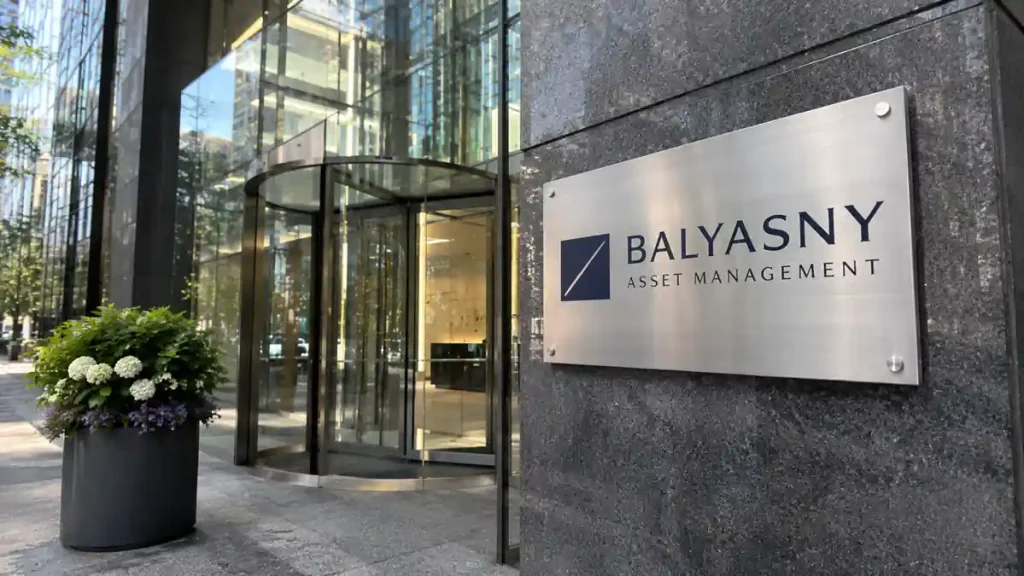
Balyasny Asset Management, the $37 billion multistrategy hedge fund firm led by Dmitry Balyasny, is closing its flagship fund to new capital for the foreseeable future following weaker investment performance and a period of rapid asset growth.
The decision, reported Nov. 19, 2026, comes after the firm’s flagship strategy lost approximately 2.7% during the first 10 months of the year. Balyasny has nearly doubled its assets under management from approximately $20 billion at the end of 2024, making investment capacity and portfolio management increasingly important considerations.
The restriction highlights a growing challenge for institutional investors seeking access to established multistrategy hedge funds. More than one-third of the world’s 100 largest hedge fund firms have reportedly closed their flagship vehicles to additional capital, even as pension funds and sovereign wealth investors continue to increase their interest in alternative investment strategies.
Balyasny Restricts Inflows After Rapid Asset Growth
According to Business Insider’s reporting on Balyasny’s fund closure, the Chicago-based investment manager has begun notifying investors that it will no longer accept fresh capital for the foreseeable future.
A person familiar with the matter confirmed the decision to the publication. Balyasny declined to comment.
The available reporting does not establish whether the restriction applies equally to additional commitments from existing investors or whether exceptions may be granted.
The move follows substantial expansion across Balyasny’s investment platform.
Assets under management increased from approximately $20 billion at the end of 2024 to $37 billion in November 2026, representing growth of roughly 85%.
That increase should not be interpreted entirely as investment performance. Assets under management can change through investor subscriptions, withdrawals and portfolio gains or losses.
For multistrategy managers, rapid asset expansion can create challenges when investment opportunities do not increase proportionately with available capital.
Restricting subscriptions may help maintain investment flexibility, although Balyasny has not publicly confirmed capacity constraints as the reason for its decision.
Hedge Fund Records 2.7% Loss Through October
Balyasny’s reported performance adds another dimension to the fundraising restriction.
The firm’s flagship strategy declined approximately 2.7% during the first 10 months of 2026, following a difficult October.
The performance figure contrasts with stronger returns reported by several competing multistrategy managers earlier in the year.
Those figures cover a different reporting period and should not be treated as directly comparable with Balyasny’s January-October result.
The weaker performance also coincided with departures from Balyasny’s investment teams.
Portfolio managers Thomas Stephens and Kevin Cottrell left the firm’s Corbets unit in October.
The available reporting does not establish a direct relationship between those departures, investment losses and the decision to restrict new capital.
However, personnel stability is an important consideration for investors evaluating multistrategy hedge funds, which rely on numerous specialist teams operating within centralized risk-management frameworks.
International Expansion Adds Operational Complexity
Balyasny has also expanded its international operations, increasing the organizational demands associated with managing a large investment platform.
The firm added 371 employees during 2025, including 157 investment professionals.
Its regulatory disclosures identify substantial investment advisory teams in London, Hong Kong and Singapore.
According to eFinancialCareers’ November reporting on Balyasny’s international management appointments, the firm has appointed Andrew Tsai, formerly of PDT Partners, to lead its international business from London.
Risa Lederhandler, a former Goldman Sachs partner, has joined as European chief operating officer and a member of Balyasny’s management committee.
Aleem Jivraj, previously an executive at Nomura, was also expected to assume a senior operational role in Hong Kong.
These appointments indicate continued investment in organizational oversight despite weaker trading performance.
For institutional investors, management infrastructure matters because large multistrategy platforms must coordinate risk limits, financing arrangements, technology systems and capital allocations across multiple trading teams.
More Than One-Third of Major Hedge Funds Restrict Capital
Balyasny’s decision comes amid broader restrictions on investor access to established hedge fund platforms.
A September 2026 Goldman Sachs report found that more than one-third of the world’s 100 largest hedge fund firms had closed their flagship funds to new capital.
Other major managers, including Citadel, Point72 Asset Management and Walleye Capital, have returned capital to investors in recent years.
Returning investor capital differs from closing a fund to new subscriptions. The former reduces existing investor balances, while the latter restricts additional inflows.
Both measures can be used to manage investment capacity.
Multistrategy hedge funds typically allocate capital across equity long-short, macroeconomic, relative-value and other investment approaches.
Their ability to deploy additional assets depends on the liquidity, expected returns and risk characteristics of available opportunities.
When capital grows faster than attractive opportunities, managers may need to accept lower expected returns, increase position sizes or expand into new strategies.
These choices can affect the risk-return profile of the investment platform.
Record Hedge Fund Assets Intensify Competition for Access
The restrictions come despite substantial growth across the global hedge fund industry.
Hedge Fund Research reported industry assets of approximately $5.6 trillion, reflecting continued institutional demand.
As examined in PE NEWSWIRE’s report on hedge fund launches declining 40% while industry assets reached $5.63 trillion, growth in aggregate assets has coincided with weaker new-fund formation.
The figures indicate that industry expansion does not necessarily translate into greater access to investment managers.
Large institutional investors, including Canadian pension funds and sovereign wealth funds in Singapore and the United Arab Emirates, have reportedly been considering substantial increases in hedge fund exposure.
However, greater allocation intentions do not guarantee that investors can secure commitments to their preferred managers.
Capacity restrictions may encourage allocators to evaluate emerging managers, alternative strategies or existing investment relationships.
For newer hedge fund firms, this could create fundraising opportunities, although institutional investors must still assess investment records, operational controls and risk management.
What Balyasny’s Closure Means for Institutional Investors
Balyasny’s decision presents a distinction between investor demand and manager capacity.
A fund can remain attractive to prospective investors while restricting subscriptions because its existing investment platform may not be able to deploy additional capital on acceptable terms.
For current investors, the closure does not necessarily change redemption rights, investment terms or portfolio exposure.
For prospective limited partners, however, access may become more difficult until the manager reopens subscriptions.
Institutional allocators evaluating comparable multistrategy platforms should consider investment capacity, team turnover, leverage, portfolio concentration and the sustainability of returns after fees.
Balyasny’s reported 2.7% loss also reinforces the importance of assessing performance over multiple market cycles rather than relying exclusively on asset growth or manager reputation.
The firm’s next developments will be measured by subsequent investment performance, the stability of its portfolio management teams and any eventual change to its fundraising restrictions.
For the wider hedge fund industry, the episode illustrates a structural tension: institutional capital continues to seek established investment managers, while some of the largest platforms are limiting the amount of additional money they are prepared to manage.