

SpaceX’s Historic IPO: Lessons for Late-Stage Venture Capital, Private Market Valuations, and Exit Environment in 2026

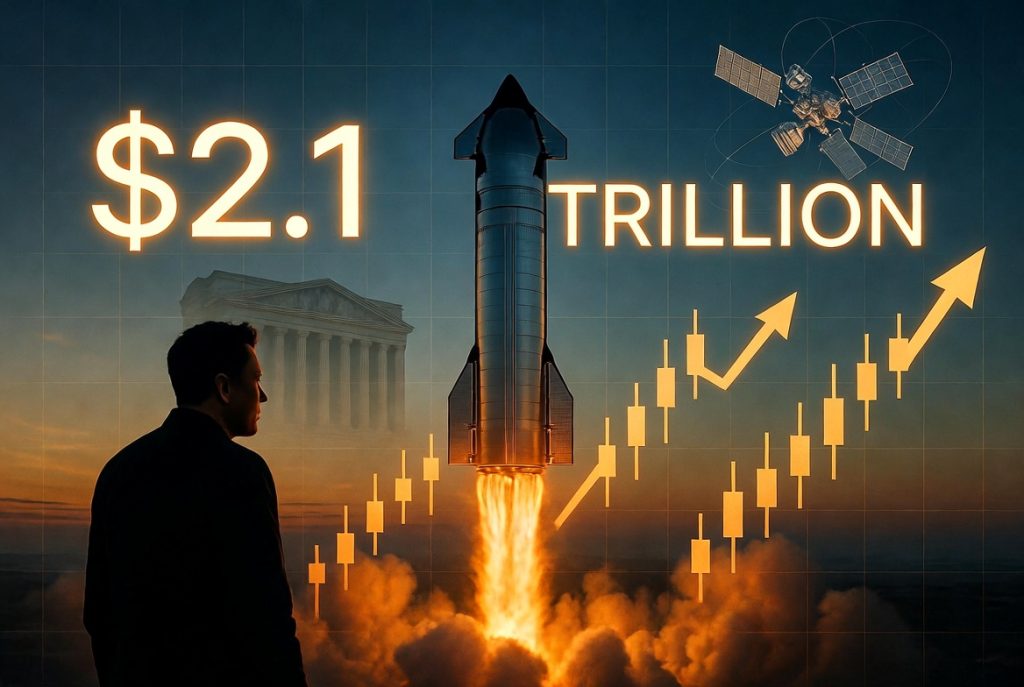
On Friday, June 12, 2026, SpaceX achieved what many in private markets had long anticipated but few believed would materialize at this scale: the largest initial public offering in history. Priced at $135 per share and raising a record approximately $75 billion (through the sale of roughly 555.6 million shares), the company opened trading around midday at $150, representing an immediate ~11% pop. Shares climbed further intraday, pushing the valuation comfortably above $2 trillion (reaching ~$2.1 trillion at close), where it held through close with a roughly 19% gain to $160.95.
This milestone not only crowned Elon Musk as the world’s first trillionaire but also marked the culmination of nearly 25 years as a private company. For private equity professionals, venture capitalists, institutional investors, fund managers, and CXOs navigating late-stage growth equity and alternative investments,
SpaceX’s debut offers a rich case study in valuation discipline, exit timing, liquidity dynamics, and the evolving interplay between private and public capital markets.
The SpaceX Journey: From Bootstrapped Ambition to Mega-Exit
SpaceX’s path underscores the power of patient capital and founder control in deep-tech ventures. Founded in 2002, the company raised roughly $11.9–12 billion across more than 30 funding rounds. Early bets from investors like Founders Fund, followed by major participations from Google/Fidelity (2015, $1B at $10B valuation), Andreessen Horowitz, Sequoia, and others, fueled its growth. Valuations escalated dramatically: $74B in 2021, $127B in 2022, climbing toward $350B–$800B in secondary tenders by 2025, before the IPO frenzy at $1.75T+ pre-debut.
Unlike many unicorns pressured into premature exits, SpaceX benefited from extended private tenure. This allowed it to achieve operational maturity—Starlink as a cash-flow engine, reusable rocket dominance, and diversification into AI/satellite data centers—while minimizing public-market scrutiny during high-risk phases like early Falcon explosions and Starship development. Revenue reached approximately $18.7 billion in 2025, with strong growth from satellite broadband.
For late-stage VC and growth equity managers, the lesson is clear: high-conviction, long-hold strategies in mission-critical sectors (aerospace, defense, connectivity) can generate asymmetric returns. Early investors, such as Founders Fund (with an estimated 3% stake), stand to realize tens of billions. Secondary liquidity events in recent years provided partial exits and employee retention without full IPO pressure, a model increasingly relevant for portfolio companies.
Valuation Dynamics: Froth, Fundamentals, or Both?
At ~90–100x trailing revenue, SpaceX’s public debut invites scrutiny. Bull cases center on Starlink’s scalability, vertical integration (rockets, satellites, chips, potential orbital AI infrastructure), and a TAM that Musk frames in trillions for space-based services and multi-planetary expansion. Optimistic analysts project massive upside, with targets like $190/share cited pre-IPO.
Skeptics, including Morningstar, argue the fair value sits nearer $63/share, citing a more modest addressable market (~$129B) and execution risks in ambitious projects. High multiples echo late-stage private market exuberance seen in AI and deep tech, where narrative and scarcity drive pricing over near-term metrics.
Key Takeaway for PE/VC Professionals
Private valuations must increasingly benchmark against potential public multiples and liquidity realities. Extended private holds have inflated pre-IPO marks via secondaries, creating “valuation gravity” upon listing. Managers should stress-test portfolios for mark-down risks in down-round IPOs or post-listing volatility. Conversely, successful debuts like this can reset sector benchmarks upward, benefiting comparable companies in satellite tech, defense, and infrastructure.
Data from recent years shows median revenue at IPO has quadrupled since the 1990s, reflecting higher bars for public readiness. SpaceX cleared this with proven revenue scale and technological moats, but many portfolio companies may need further maturation or hybrid liquidity (secondaries + partial IPOs).
Implications for the 2026 Exit Environment
The IPO drought of recent years left trillions locked in private markets, pressuring LPs for distributions and GPs for realizations. SpaceX’s success signals a potential thaw, especially for mega-cap, category-defining assets in AI-adjacent, infrastructure, and strategic tech.
Positive signals include:
- Reopened IPO window for high-quality names, with 2025 already showing improvement and 2026 poised for more.
- Mega-IPO pipeline: Discussions around other large privates suggest a class of listings that could dwarf prior cycles in value creation.
- Capital recycling: Realized gains from SpaceX (and similar exits) will flow back into new funds, boosting dry powder deployment in growth equity, venture, and secondaries.
However, risks remain. Public markets may be selective, favoring proven revenue and defensibility over hype. Post-IPO performance of big debuts has varied historically; while some deliver strong long-term returns, others face volatility. Concentration risk for investors (e.g., index inclusion effects) and regulatory scrutiny on founder-controlled mega-caps are also considerations.
For institutional investors and fund-of-funds managers, this underscores the value of diversified private exposure with deliberate liquidity ladders—secondaries for interim monetization, strategic sales, and selective IPOs. Buyout and private debt strategies may find opportunities in supporting late-stage companies toward exits or in distressed scenarios if valuations reset.
CXOs of portfolio companies should note: Strong governance, clean cap tables, and clear paths to profitability or strategic moats enhance exit optionality. Dual-class structures (as Musk utilized) preserve vision but require transparency with LPs.
Broader Lessons for Private Capital Strategies
- Patience Pays in Deep Tech: Nearly 25 years private allowed SpaceX to derisk core technologies. Late-stage capital should prioritize companies with multi-year runways over short-term hype.
- Secondaries as Bridge: Frequent tender offers provided liquidity without full exit pressure, a tactic growth equity and PE funds should integrate more systematically for talent retention and LP returns.
- Sector Convergence: Space/defense/tech infrastructure increasingly overlaps with artificial intelligence, Cybersecurity, data, and climate. Allocators should examine cross-sector theses, where private debt or infrastructure funds can complement VC/growth plays.
- Risk Management in High Valuations: With multiples detached from traditional metrics, scenario planning for public comps, interest rate sensitivity, and geopolitical tailwinds (e.g., national security importance of SpaceX) is essential.
- LP-GP Alignment: Mega-exits highlight the need for clear carry crystallization, reinvestment policies, and communication around long-hold J-curves.
Looking ahead in 2026, the exit environment appears brighter than in years prior, aided by stabilizing rates and landmark listings. Yet success will hinge on discipline: not every company merits SpaceX-like patience or multiples. Private markets professionals who extract actionable lessons—on valuation realism, liquidity innovation, and strategic scaling—will be best positioned to deliver alpha amid evolving capital market dynamics.
SpaceX’s debut is more than a headline; it is a inflection point validating the private capital model’s capacity for transformative outcomes while highlighting the need for adaptive strategies in a maturing ecosystem. For PE Newswire readers, the mandate is clear: study the trajectory, apply the principles, and prepare portfolios for a wave of realizations that could define the year.
Stay informed with PE Newswire for authoritative coverage of global private capital markets, including the latest deals, fundraising activity, in-depth insights, and data-driven analysis.