
KKR Secures $2.9 Billion Infinity Exit as Ares Expands Infrastructure and Insurance Investments

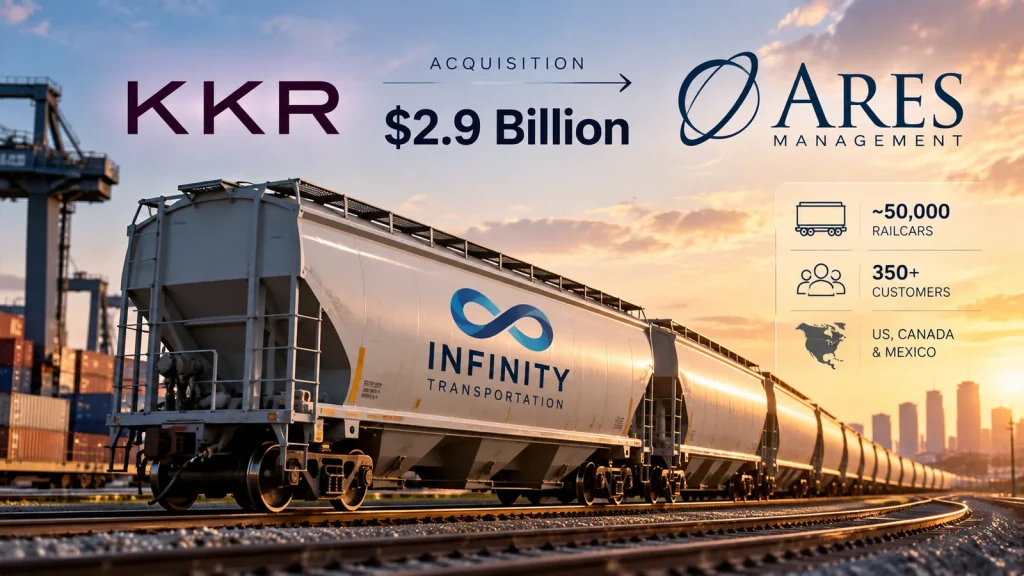
KKR has agreed to sell Infinity Transportation, a North American railcar leasing platform, to funds managed by Ares Management for approximately $2.9 billion, marking a significant asset-backed finance exit for KKR and an expansion of Ares’ transportation infrastructure investments.
Announced Oct. 19, 2026, the transaction involves Ares Infrastructure Equity and Ares Insurance Solutions funds. The acquisition is expected to close in the first quarter of 2027, subject to regulatory approvals and customary closing conditions.
The agreement transfers a substantial portfolio of income-generating transportation assets between two major alternative investment managers at a time when insurers and infrastructure investors are seeking long-duration investments.
Infinity’s Railcar Portfolio Expands Under KKR
Founded in 2004 and headquartered in Atlanta, Infinity Transportation owns and manages approximately 50,000 railcars serving more than 350 customers across the United States, Canada and Mexico.
KKR’s insurance subsidiary, Global Atlantic, initially invested in Infinity in 2016, before KKR acquired majority control of the insurer in 2021.
Since 2021, Infinity has established an independent operating platform, expanded its fleet and increased its book value by 150%, according to KKR.
That represents a 2.5-fold increase in book value, although the companies have not disclosed KKR’s realized investment return or the equity proceeds expected from the sale.
The transaction’s $2.9 billion enterprise valuation includes the business’s overall capital structure and should not be interpreted as KKR’s cash proceeds.
Ares Combines Infrastructure and Insurance Capital
The acquisition brings together two investment strategies within Ares: infrastructure equity and insurance-related capital.
Railcar leasing businesses can generate contractual income through equipment leases while retaining ownership of physical assets with potentially long operating lives.
These characteristics can appeal to insurance investors seeking assets with cash flows aligned to long-term liabilities.
Ares intends to support Infinity’s fleet expansion, customer relationships and potential acquisitions following completion.
The transaction also expands Ares’ exposure to transportation and logistics, complementing infrastructure investments traditionally concentrated in energy, utilities and digital assets.
Ares reported more than $671 billion in assets under management as of June 30, 2026, providing substantial investment capacity across its alternative asset strategies.
Railcar Valuations Reflect Asset Scarcity
The acquisition comes as railcar leasing attracts interest from infrastructure investors seeking exposure to North American industrial activity.
Railcar lessors own approximately 58% of North America’s 1.65 million railcars, compared with 44% in 2008, according to industry figures cited by PitchBook.
Meanwhile, railcar manufacturing deliveries declined from more than 82,000 units in 2015 to approximately 31,000 in 2025.
Limited replacement supply can support demand for existing fleets, although leasing economics remain sensitive to industrial production, equipment utilization and maintenance costs.
Infinity’s approximately $58,000 enterprise valuation per owned or managed railcar provides a broad transaction benchmark, but it is not a precise equipment valuation because the fleet includes managed assets and different railcar types.
Sponsor-to-Sponsor Exit Offers Liquidity
The sale provides an example of a large alternative asset manager transferring a mature operating platform to another manager with a different investment mandate.
Such transactions can generate liquidity for existing investors without requiring a public listing or strategic corporate acquisition.
For KKR, the agreement demonstrates a potential realization route for asset-backed finance investments developed through Global Atlantic.
For Ares, Infinity offers an established leasing platform that can potentially deploy additional capital into fleet growth and transportation equipment acquisitions.
Macquarie Capital advised KKR, with Simpson Thacher & Bartlett serving as legal counsel. Citi advised Ares, while Kirkland & Ellis provided legal advice.