

Radical Ventures Raises $1 Billion-Plus for Canada’s Largest VC Fund

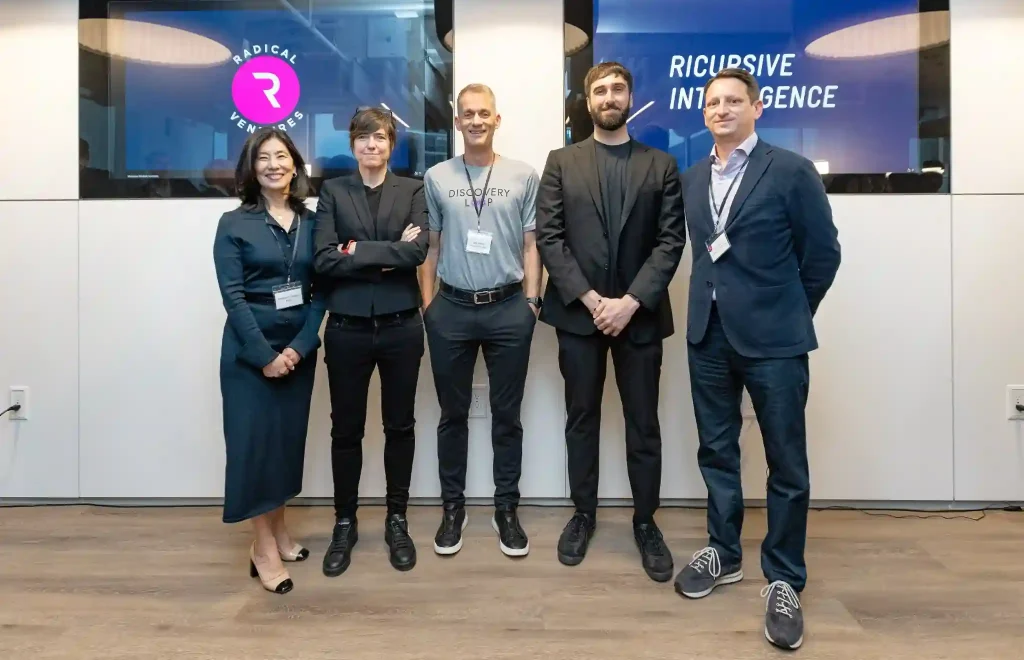
Radical Ventures has secured more than $1 billion in commitments at the first close of its Radical Breakouts Fund, establishing what the Toronto-based investment firm says is the largest venture capital fund in Canadian history and giving it substantially more firepower to finance late-stage artificial intelligence companies.
Canadian institutional investors are central to the new strategy. PSP Investments, CPP Investments, Healthcare of Ontario Pension Plan, TD Bank Group, BMO Financial Group, CI Global Asset Management and OPTrust are among the investors committing capital to the fund, which Radical ultimately describes as a multibillion-dollar vehicle. The first close was announced Sept. 15 at the Canada Investment Summit in Toronto. Radical did not disclose individual commitments.
Radical moves deeper into late-stage AI
The Breakouts Fund expands Radical beyond its earlier-stage venture strategy into financing AI businesses that require increasingly large amounts of capital as they scale.
Radical said the fund will invest globally in AI scale-ups, including Canadian companies, as businesses remain private longer and raise increasingly large rounds before reaching public markets. The firm cited Cohere, Waabi, Xanadu, Veeda and Aspect Biosystems among Canadian companies already in its portfolio. Radical also backs companies including World Labs, Etched, Crusoe and Prime Intellect.
The firm’s Radical Breakouts Fund announcement says the strategy is intended to address a financing gap in Canada, where technology companies have historically needed to seek larger pools of growth capital outside the country as they mature.
That distinction makes the fund notable beyond its headline size. Rather than concentrating on seed and Series A financings, Breakouts is targeting the capital-intensive phase where AI companies are building infrastructure, expanding internationally and competing with heavily financed U.S. rivals.
Canadian pensions deepen AI exposure
The investor roster also illustrates how Canada’s largest pension institutions are increasing their exposure to AI through private-market managers.
CPP Investments has backed Radical since 2019. Before the latest Breakouts Fund announcement, its commitments across Radical fundraising cycles totaled approximately $280 million, according to CPP Investments’ account of its Radical Ventures partnership. CPP Investments initially anchored Radical’s first $325 million institutional fund with a $50 million commitment.
CPP Investments said in the Breakouts announcement that the new strategy extends that relationship into later-stage companies. PSP Investments, meanwhile, said it has been an anchor investor in Radical since the manager’s first institutional fund.
For pension investors, the strategy offers exposure to AI without requiring them to select individual venture-backed companies. It also shifts part of the investment opportunity toward growth-stage businesses, where companies may have more established products and revenue but require much larger checks.
The institutional backing is consistent with a broader move toward private-market AI exposure. PE NEWSWIRE recently examined J.P. Morgan’s view that AI could create a $3 trillion to $5 trillion opportunity spanning venture capital, growth equity and other private-market strategies.
AI mega-rounds are reshaping venture capital
Radical’s fundraising comes as artificial intelligence concentrates an increasingly large share of global venture dollars into a smaller number of highly valued companies.
That dynamic is particularly important for late-stage managers. Frontier-model developers, AI infrastructure providers and other scaling technology companies can require financing rounds measured in hundreds of millions or billions of dollars, making fund size a competitive factor when investors seek meaningful ownership positions.
PE NEWSWIRE recently reported that Mistral raised €3 billion at a valuation exceeding €21 billion, illustrating the scale of capital now flowing into leading AI businesses outside the U.S.
Radical is positioning Breakouts for that segment of the market. The firm said the strategy reflects a world in which leading private companies can reach valuations above $100 billion before an initial public offering.
The approach carries corresponding risks. Larger late-stage rounds can reduce the valuation cushion available to investors if growth slows, while extended private-company timelines can lengthen the period before liquidity through an IPO or acquisition. Concentration around AI also increases exposure to rapid technological change and shifting competitive positions.
A larger Canadian pool of growth capital
Radical’s fundraising is also an attempt to address a structural issue in Canada’s technology ecosystem: the gap between the country’s research and startup capabilities and the domestic capital available when companies reach later stages.
Radical had more than $2.5 billion of assets under management before the new Breakouts announcement, according to CPP Investments. Its expansion into a multibillion-dollar late-stage strategy represents a substantial increase in the amount of capital a Canadian-headquartered venture manager can deploy into individual growth companies.
The fund is global rather than restricted to Canadian companies, which is important for its institutional investors. Pension funds are seeking investment returns rather than operating as domestic development agencies, and Radical will compete for AI transactions across international markets.
Still, a larger Canada-based pool gives domestic AI companies another potential source of growth capital without automatically turning to U.S.-based investors for their largest rounds.
With more than $1 billion already committed and a multibillion-dollar target strategy, the Breakouts Fund also demonstrates how AI is reshaping venture fundraising itself. While specialist managers in some sectors are struggling to raise capital, institutional investors are willing to commit at substantially greater scale to managers positioned around late-stage AI.
For Radical Ventures, the test now shifts from fundraising to deployment: securing positions in leading AI companies at valuations that can generate venture-style returns for pension funds and other institutional LPs despite the unprecedented amount of capital competing for the sector.