Pivotal Ventures Backs Women-Led Private Equity Firms as Awani Raises $558 Million


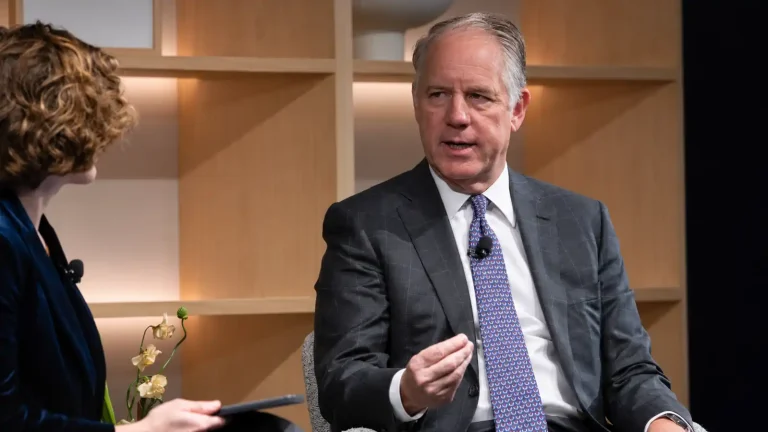
Pivotal leadership team members driving the organization's investment strategy to expand opportunities for women in private equity, venture capital and institutional investment management.
Pivotal Ventures, the investment organization founded by Melinda French Gates, is expanding its private-markets strategy beyond venture capital by backing women-led buyout firms Invidia Capital Management and Awani Capital, whose inaugural fund has raised more than $558 million.
The expansion targets a significant imbalance in U.S. private equity: women hold just 6% of senior investment positions, while Pivotal estimates a $1.6 trillion disparity in assets controlled by senior male and female investment professionals.
The strategy gives Pivotal exposure to established middle-market businesses while supporting emerging investment managers who have historically faced barriers to institutional capital.
Pivotal Ventures Expands Beyond Venture Capital
Pivotal previously concentrated its fund-manager investments on venture capital, an asset class representing approximately 20% of the global private investment market, according to the organization’s analysis of Preqin data.
Its expansion into buyouts and other private assets significantly broadens the range of investment managers and underlying businesses it can support.
In its September 2026 private equity expansion announcement, Pivotal identified Awani Capital and Invidia Capital Management as its first two partnerships under the expanded strategy.
Erin Harkless Moore, Managing Director of Pivotal said “Venture capital is powerful, but it’s only one part of the private capital engine. To spark the progress society needs, we need to leverage investments across private asset classes—putting capital in the hands of a broad set of game-changing fund managers who we are confident will drive strong returns.”
Awani focuses on essential business and industrial services, while Invidia specializes in healthcare investments.
The two commitments illustrate how Pivotal intends to address representation in capital allocation without restricting its investments to companies selling products or services specifically for women.
The organization has supported 27 female-led investment funds managing nearly $6.7 billion, according to figures reported by Forbes. That amount represents assets managed by the supported funds, not capital invested directly by Pivotal.
Awani Capital Raises $558 Million for Debut Buyout Fund
Awani Capital, founded by managing partner Daphne Dufresne, provides a measurable example of the fundraising capacity of an emerging women-led private equity manager.
An amended SEC Form D filing dated Aug. 19, 2026 shows that Awani Capital Fund LP had sold $558.1 million in securities to 29 investors.
The reported amount exceeds the fund’s previously stated $500 million fundraising target by approximately 11.6%. The filing lists the total offering amount as indefinite, so it should not be interpreted as confirmation of a final fund closing.
Dufresne established Awani after more than 25 years in private equity, including senior leadership experience at an established middle-market investment firm.
Awani’s portfolio includes a specialty food ingredients business and a residential roofing platform assembled from two California contractors.
These investments provide exposure to established operating businesses rather than the early-stage technology companies traditionally associated with venture capital.
The fundraising is notable because first-time private equity managers must often establish institutional relationships and demonstrate operational capabilities without the fund-level performance history available to established sponsors.
The wider fundraising challenge has also been documented in PE NEWSWIRE’s reporting on emerging private equity managers in Europe, where institutional investors have increasingly favored established firms.
Awani’s fundraising demonstrates that experienced investment teams can attract substantial commitments despite those broader obstacles, although the available disclosures do not establish the fund’s investment performance.
Invidia Capital Targets Established Healthcare Businesses
Pivotal’s second partnership involves Invidia Capital Management, the healthcare-focused private equity firm founded by Jo Natauri.
In April 2026, Invidia signed an agreement to acquire WIN, a company providing fertility, maternity, menopause and family-building benefits to employers and health plans.
The transaction was awaiting regulatory approval at the time of the Nov. 18 Forbes report. Its purchase price was not disclosed.
WIN has approximately three decades of operating history and says it has supported more than 900,000 families.
For Invidia, the investment offers exposure to an established healthcare services platform with existing institutional customers and opportunities to expand its offerings.
The acquisition also illustrates a distinction between venture capital and traditional buyout investing. Whereas early-stage investors frequently finance companies developing new products or markets, buyout firms can acquire established businesses with operating histories and existing revenue sources.
Healthcare remains an important area of private equity investment, although the sector also carries regulatory, reimbursement and operational risks.
Invidia’s WIN investment will ultimately need to be assessed against financial performance, service quality and healthcare outcomes rather than its investment thesis alone.
The $1.6 Trillion Gender Gap in Private Equity
Pivotal’s investment expansion is partly informed by research showing that women remain substantially underrepresented in senior private equity positions.
Research involving Columbia Business School, Level20 and Three Cairns Group found that women occupy approximately 22% of U.S. private equity investing roles but only 6% of senior positions.
Pivotal estimates that achieving gender parity in senior investment responsibility would require women to control an additional $1.6 trillion in existing private equity assets.
That figure is an estimate of the gender disparity in capital allocation authority, not a fundraising target, available investment opportunity or commitment by Pivotal.
The distinction matters because senior investment professionals influence acquisition decisions, portfolio construction and the allocation of institutional capital.
Increasing the number of women in those positions could broaden the range of investment approaches considered by private equity firms. However, greater representation does not independently establish superior investment returns.
Institutional Investors Face a Manager Selection Question
Pivotal’s expansion raises a practical question for limited partners evaluating emerging managers: how should institutional investors assess experienced teams that lack an established standalone fund record?
Relevant considerations include individual investment histories, realized exits, investment discipline, governance, portfolio concentration and operational capabilities.
Awani’s fundraising provides evidence of institutional demand, while Invidia’s healthcare acquisitions offer a basis for evaluating its investment strategy.
Neither development, however, establishes long-term fund performance.
For Pivotal, the broader private equity strategy creates opportunities to influence who controls investment capital across sectors extending well beyond venture-backed technology.
Its longer-term significance will depend on whether the supported managers generate competitive risk-adjusted returns, build sustainable investment franchises and attract additional institutional commitments without relying on mission-oriented capital alone.