US Midterm Results Raise Regulatory Risks for Private Equity Firms

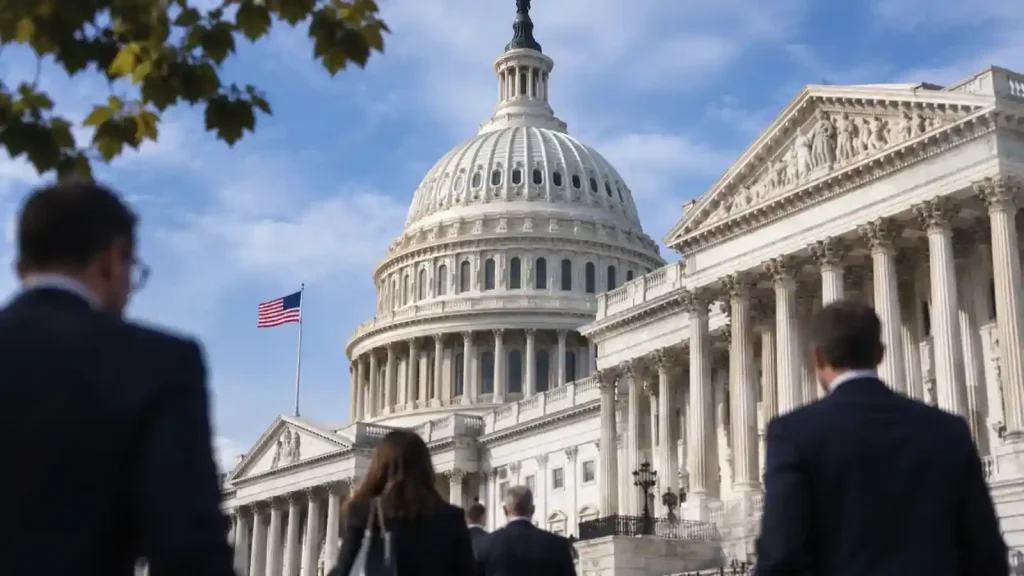
The U.S. private equity industry faces a changed regulatory and political environment after the November 3 midterm elections, with Democrats winning control of both chambers of Congress and several lawmakers who received substantial financial support from investment industry employees losing their seats.
Four of the 10 largest recipients of direct campaign contributions from private equity employees were defeated.
The results could increase congressional scrutiny of buyout firms’ activities in healthcare, housing, taxation and retirement investments, even as the industry continues to seek broader access to private markets.
Private Equity Campaign Contributions Exceed $76 Million
Employees of private equity firms and other investment businesses contributed more than $76 million directly to candidates and political party committees during the 2026 election cycle.
Approximately 62% of those contributions went to Republicans, reflecting a preference among many industry donors for candidates supporting business-friendly tax and investment policies.
Political spending through outside organizations showed an even larger difference. Through October 14, private equity-related donors had contributed approximately $113 million to conservative groups, compared with $22 million to liberal organizations.
These figures represent different categories of political contributions and should not be interpreted as a single measure of private equity firms’ corporate spending. Contributions from individual employees, political committees and outside groups are subject to different disclosure and financing rules.
Susan Collins Defeat Removes a Key Senate Ally
Republican Sen. Susan Collins of Maine was among the most significant election losses for private equity donors.
Collins received approximately $773,000 in direct contributions from industry employees through October 14, making her the largest recipient identified in the Journal’s analysis.
She lost to Democrat Troy Jackson, who campaigned on affordability concerns and criticized private equity ownership of residential property and healthcare businesses.
Collins had participated in major federal tax negotiations, including discussions relevant to the industry’s treatment of carried interest.
Carried interest generally represents a share of investment profits allocated to fund managers. Its tax treatment has long been contested because qualifying gains may receive capital gains treatment rather than being taxed entirely as ordinary compensation.
Other industry-supported Republicans who lost included Michigan Senate candidate Mike Rogers and New York Rep. Mike Lawler.
Lawler had supported federal efforts to expand access to private equity through workplace retirement plans.
In Alaska, Republican Sen. Dan Sullivan, who received nearly $400,000 in industry-related direct contributions, was trailing Democrat Mary Peltola as of Wednesday afternoon, with the contest still undecided at that time.
The industry’s political relationships nevertheless extend across party lines. Democratic Sens. Mark Warner and Jon Ossoff retained their seats, while Democrat Roy Cooper won a Republican-held Senate seat in North Carolina. All three received substantial contributions from investment industry employees.
Congressional Oversight Could Focus on Healthcare and Housing
The election results create opportunities for Democratic lawmakers to pursue investigations into private equity ownership structures, financial practices and consumer-facing portfolio companies.
Healthcare is a particularly significant area of potential oversight.
Congressional investigators could examine whether acquisitions of hospitals, physician practices and nursing homes affect treatment costs, staffing, competition and service quality.
A 2024 Congressional Research Service examination, Private Equity Investments in Health Care: Selected Enforcement Issues, documented regulatory concerns surrounding private equity-backed healthcare businesses, while also recognizing industry arguments that private investment can improve operating efficiency and patient care.
The Congressional Research Service’s analysis of private equity healthcare enforcement provides a legal foundation for understanding potential investigations into ownership arrangements, competition and sponsor responsibility.
For buyout firms, congressional investigations can create compliance and reputational exposure independently of whether new legislation is enacted.
The implications extend to portfolio-company governance. PE NEWSWIRE previously examined legal claims involving Bain Capital and its PowerSchool portfolio company, illustrating how questions about sponsor influence and operational control can arise in litigation.
Proposed Legislation Targets Sponsor Liability and Fund Transparency
The new congressional composition also places existing private equity reform proposals in a different legislative setting.
On September 24, Sen. Elizabeth Warren and other lawmakers reintroduced the Stop Wall Street Looting Act, which proposes changes to the legal and financial responsibilities of private equity managers.
The legislation includes provisions intended to increase sponsor responsibility for portfolio-company obligations, strengthen investor disclosures and impose additional restrictions on certain financial practices.
According to the Senate Banking Committee’s announcement of the Stop Wall Street Looting Act, the proposal also addresses management fees, fund transparency and the treatment of real estate investment trusts operating in healthcare.
The proposal is distinct from enacted law, and congressional control does not guarantee passage.
However, committee leadership can influence legislative hearings, requests for information and investigations, potentially increasing the resources that private equity managers must devote to regulatory engagement and disclosure. banking.
Retirement Investment Access Faces a New Political Test
Another area of potential friction concerns the expansion of private market investments into individual retirement accounts and defined-contribution plans.
Private equity managers have pursued broader distribution through wealth management platforms and retirement savings channels, seeking access to investor capital beyond traditional institutional limited partners.
Supporters argue that carefully structured access can provide additional diversification opportunities. Critics emphasize illiquidity, valuation uncertainty, fees and the suitability of long-duration investments for retirement savers.
PE NEWSWIRE has previously covered SEI and Carlyle’s partnership to expand private markets access for wealth and retirement investors, reflecting the commercial importance of distribution beyond traditional pension and endowment allocations.
For managers developing retirement-oriented investment products, the relevant policy questions include investor eligibility, liquidity provisions, fee transparency and fiduciary obligations.
What the Election Means for Private Capital Managers
The immediate consequences of the 2026 elections are more closely connected to congressional oversight and regulatory uncertainty than to any confirmed change in private equity taxation or investment rules.
Democratic control of Congress gives lawmakers additional opportunities to examine portfolio-company practices, request documents and scrutinize financial structures.
Private equity firms may consequently face increased attention to healthcare acquisitions, housing investments, leveraged buyouts, retirement products and carried-interest taxation.
For institutional investors, these developments introduce additional considerations when evaluating managers with significant exposure to politically sensitive sectors.
Limited partners may place greater emphasis on regulatory compliance, portfolio-company governance, financial transparency and potential litigation risks during fund due diligence.
The election does not eliminate private equity’s relationships with lawmakers from either party. However, the defeat of several prominent industry-supported candidates changes the political setting in which private capital managers will pursue their legislative and regulatory priorities.