Former Carlyle and Warburg Pincus Executives Launch Noveon Capital to Buy Discounted Asian Secondaries


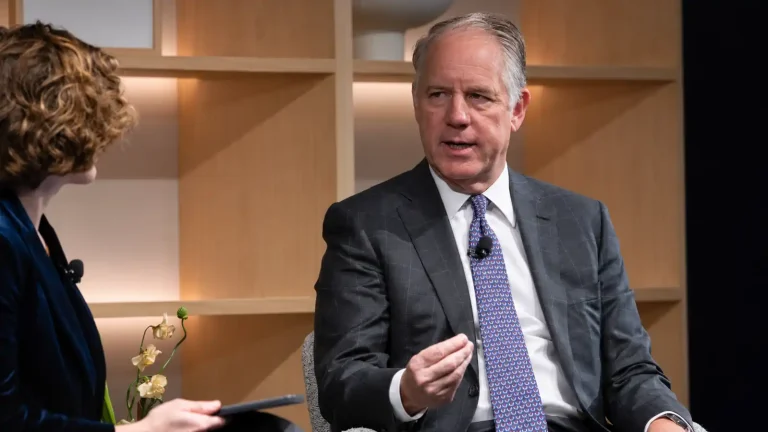
Sung Ko (left), Co-founder & Managing Partner of Noveon Capital. Chris Shen, (right) is Co-founder & Managing Partner of Noveon Capital
Noveon Capital, a Hong Kong-based private equity secondaries firm founded by former Carlyle executive Sung Ko and former Warburg Pincus investor Chris Shen, is targeting $150 million for its debut fund as it seeks to acquire discounted interests in mature Asian private equity portfolios.
The firm has already completed three transactions involving older Chinese investment funds, acquiring positions at reported discounts of 40% to 50% to net asset value. Its launch, disclosed in November 2026, comes as institutional investors face prolonged holding periods and limited distributions from Asian private equity and venture capital funds.
Noveon plans to invest $5 million to $50 million per transaction, concentrating on established companies and funds with substantial exposure to individual assets. Its strategy combines limited partner stake purchases, general partner-led continuation vehicles and deal-specific investment structures.
Why the Former Carlyle and Warburg Pincus Executives Target Asian Secondaries?
Ko spent 11 years at Carlyle, most recently serving as a managing director in its Asian business. Shen previously worked at Warburg Pincus and Bain Capital, bringing investment experience to the new platform.
The founders are pursuing transactions across Greater China, North Asia and Southeast Asia, with China representing their principal initial opportunity.
The firm is combining a planned closed-end fund with deal-by-deal special-purpose vehicles.
These structures could allow Noveon to raise capital from institutional investors, family offices and private wealth investors without relying exclusively on a conventional commingled fund.
The $150 million figure is a fundraising target, not a reported final close or confirmed amount of committed capital.
Noveon has reportedly evaluated more than 60 potential transactions representing approximately $17 billion in stated net asset value. That pipeline does not constitute completed investments or capital under management.
China Fund Stakes Trade at Discounts of Up to 50%
Noveon’s initial transactions illustrate its preference for concentrated exposure to established private companies.
One reported acquisition involved an interest in GSR Ventures Fund IV, which Ko said had approximately 92% of its portfolio invested in Xiaohongshu, the Chinese social media company also known as RedNote.
The transaction demonstrates how a secondary buyer can obtain exposure to a specific company by purchasing an interest in an existing fund rather than acquiring shares directly.
Noveon is particularly interested in mature funds where more than half the remaining portfolio value is concentrated in one business.
The firm says its first three positions involved funds with an average age of approximately 15 years.
Such portfolios can present liquidity challenges for original investors, particularly when conventional exits through initial public offerings or corporate acquisitions have been delayed.
Noveon’s reported purchase discounts of 40% to 50% may appear attractive relative to stated portfolio valuations. However, those discounts do not automatically translate into investment returns.
Actual performance depends on the reliability of underlying valuations, remaining holding periods, transaction expenses and eventual exit proceeds.
For example, purchasing a fund interest at half its reported net asset value provides limited protection if the underlying asset subsequently experiences a comparable decline in realizable value.
Asia’s Secondaries Market Remains Smaller Than Western Markets
The opportunity reflects a substantial geographic imbalance in secondary-market activity.
According to Jefferies’ April 2026 analysis of Asia-Pacific secondaries, the region accounted for less than 10% of the $240 billion global secondary market in 2025.
Jefferies also identified weaker merger activity, fewer exit opportunities and persistent distribution constraints as factors supporting demand for secondary liquidity across Asia.
The contrast is significant because Asian private equity funds hold substantial unrealized assets, while dedicated secondary transaction activity remains concentrated in North America and Europe.
Industry reporting has cited more than $3 trillion in unrealized Asian private equity and venture capital investments, although that estimate should not be interpreted as capital immediately available for secondary transactions.
The broader expansion of secondary investing has been documented in PE NEWSWIRE’s coverage of CVC’s $10 billion secondaries fund.
CVC’s significantly larger platform illustrates the scale of institutional capital being directed toward private-market liquidity strategies.
Noveon is pursuing a narrower segment, focusing on smaller transactions and concentrated Asian portfolios where specialist sourcing relationships may provide an advantage.
Continuation Vehicles Offer Another Exit Route
Noveon’s strategy also includes general partner-led continuation vehicles.
These transactions allow an existing private equity manager to transfer selected portfolio companies into a newly capitalized investment vehicle.
Original limited partners can typically elect to receive liquidity or maintain exposure, while incoming investors finance the transaction.
For Asian managers holding valuable companies beyond their original fund investment periods, continuation vehicles can provide additional ownership time without requiring an immediate sale of the underlying business.
However, these arrangements introduce potential conflicts because the existing manager may participate in both sides of the transaction.
Valuation, fee arrangements, carried interest and investor consent therefore become important considerations.
The governance issues were examined in PE NEWSWIRE’s reporting on private equity continuation funds and investor scrutiny.
For Noveon, the ability to negotiate transactions with established sponsors could help differentiate its strategy from conventional secondary funds purchasing diversified institutional portfolios.
Fundraising Strategy Targets Family Offices and Private Wealth
Noveon is also seeking to build an investor base among private equity executives, family offices and high-net-worth investors.
Its proposed combination of a closed-end fund and individual special-purpose vehicles could provide flexibility for investors seeking exposure to specific companies or transactions.
That approach differs from conventional private equity fund commitments, where limited partners generally delegate investment selection to the manager across a diversified portfolio.
Deal-specific vehicles can offer greater transparency into underlying holdings, but they also expose investors to more concentrated company, country and exit risks.
For investors evaluating Asian secondaries, due diligence must extend beyond the headline purchase discount.
Currency exposure, geopolitical restrictions, shareholder rights, fund documentation and the practical ability to realize investments can materially affect outcomes.
What Noveon’s Launch Means for Institutional Investors
Noveon’s entry adds another specialist buyer to a region where aging private equity portfolios and limited exit activity have created demand for alternative liquidity solutions.
Its $150 million fundraising ambition remains modest compared with global secondary-market platforms, but its transaction size and concentrated investment approach position it within a different competitive segment.
The firm’s three reported transactions provide evidence of initial deployment activity, although their financial terms and eventual performance have not been independently established through public transaction disclosures.
For existing limited partners, additional secondary buyers could expand liquidity options for long-held Asian fund interests.
For new investors, discounted purchases may offer attractive entry points, provided the underlying businesses have credible exit prospects and the transaction structures protect investor interests.
Noveon’s ability to scale will depend on converting its reported transaction pipeline into completed investments, raising committed capital and generating realized distributions.
Its launch illustrates a broader development in Asian private markets: investors are increasingly seeking specialized mechanisms to release capital from mature portfolios rather than relying solely on traditional acquisitions and public listings.