Hong Kong’s $2.9 Trillion Offshore Wealth Market Eyes Middle East and Central Asia

Hong Kong’s wealth management industry could attract a broader pool of international investors by strengthening its financial connections with the Middle East and Central Asia, according to Boston Consulting Group (BCG), as the city seeks to build on its position as the world’s largest cross-border wealth management center.
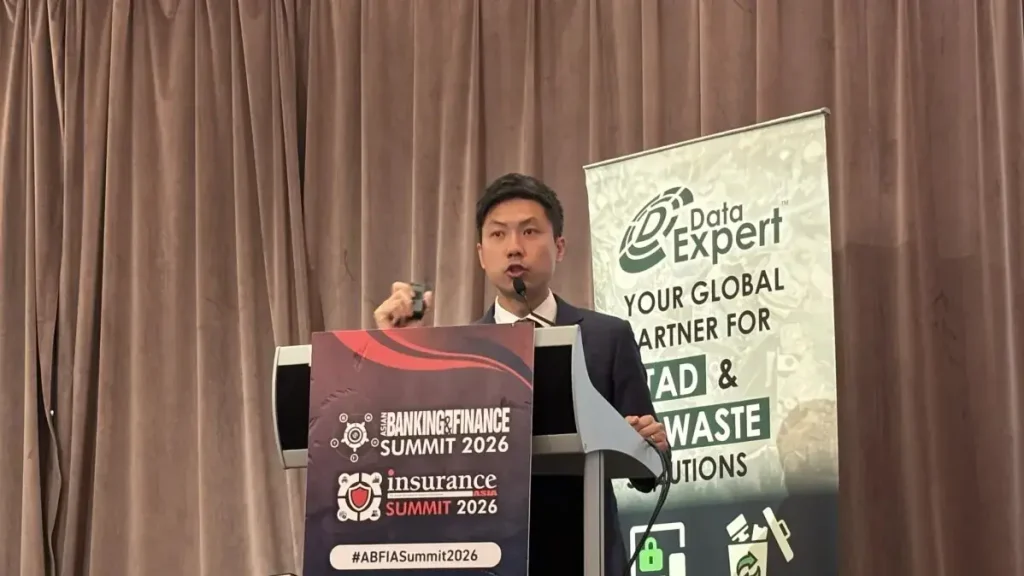
David Chan, managing director and partner at BCG, identified emerging-market capital, mainland Chinese investment demand and intergenerational wealth transfers as significant opportunities during the Asian Banking.
The opportunity comes as Hong Kong’s cross-border wealth holdings reached an estimated $2.9 trillion in 2025, according to BCG’s Global Wealth Report 2026. The findings suggest that the city’s next phase of expansion could depend increasingly on attracting investors beyond its established mainland Chinese client base.
Middle East and Central Asia Offer New Capital Channels
Financial institutions and wealth managers from the Middle East and Central Asia have been exploring opportunities to establish operations in Hong Kong, according to Chan’s remarks at the summit.
Their interest reflects the potential to connect investors seeking international diversification with mainland Chinese financial markets through Hong Kong’s established financial infrastructure.
For Middle Eastern family offices, sovereign investment organizations and private wealth managers, Hong Kong offers access to Asian investment opportunities alongside international banking, custody and advisory services.
However, interest in establishing a presence does not necessarily translate into committed investment flows. The scale of future allocations will depend on investment mandates, regulatory requirements and the availability of suitable opportunities.
Hong Kong’s positioning is supported by BCG’s Global Wealth Report 2026, which found that cross-border wealth booked in the city increased 10.7% during 2025.
The report also identified the United Arab Emirates as another expanding international wealth center, with cross-border assets rising 11.1% during the same period.
These developments create potential for greater financial connectivity between Asian and Gulf investment markets, particularly where investors seek geographic diversification.
Hong Kong’s Asset Management Industry Reaches Record Scale
Hong Kong’s broader asset and wealth management industry has also expanded significantly.
According to the Securities and Futures Commission, total assets under management reached HK$42.2 trillion ($5.4 trillion) at the end of 2025, representing a 20% annual increase.
Private banking and private wealth management assets rose 24% to HK$12.9 trillion ($1.7 trillion).
The regulator also reported HK$2.1 trillion in net fund inflows during 2025, a substantial increase from the previous year.
The figures provide an important distinction between Hong Kong’s overall asset management industry and its offshore wealth market. The $2.9 trillion cross-border estimate measures internationally booked wealth, while the regulator’s broader industry figures encompass additional asset management and advisory activities.
For alternative investment managers, the expansion of Hong Kong’s wealth management infrastructure creates potential distribution opportunities across private equity, private credit, infrastructure and other private-market strategies.
These opportunities are particularly relevant as asset managers develop investment products designed for eligible private banking clients and family offices.
PE NEWSWIRE previously examined the expansion of private-market investment distribution through Capital Group and KKR’s public-private credit partnership, which targets wealth and institutional investors in Europe and Asia Pacific.
Emerging Markets Could Generate Nearly $7 Trillion in Additional Wealth
BCG expects emerging markets to generate substantial new financial wealth through the end of the decade.
Its 2026 analysis projects that investors with more than $250,000 in financial assets across emerging markets will collectively add approximately $6.9 trillion in wealth between 2025 and 2030.
India, Brazil and Mexico are among the largest contributors to the projected expansion.
The research identifies investors holding between $250,000 and $5 million in investable assets as an underserved segment of the global wealth management market.
These investors often require more sophisticated portfolio management and diversification services than traditional retail banking provides but may not meet the minimum requirements of international private banks focused on larger fortunes.
For Hong Kong-based institutions, serving this market could require partnerships with regional banks, independent wealth managers and investment advisers that already maintain local client relationships.
The opportunity is therefore not limited to attracting ultra-high-net-worth investors. It also involves developing scalable investment and advisory services for an expanding affluent population.
Intergenerational Wealth Transfer Creates Demand for Family Office Services
Another significant growth opportunity involves succession planning among Asia’s wealthy business-owning families.
BCG’s research indicates that between 40% and 50% of major enterprises in Singapore, Malaysia and Indonesia remain founder-led, with median leadership ages exceeding 70.
This demographic pattern is increasing the relevance of estate planning, ownership restructuring, family governance and long-term investment management.
For private equity firms and alternative asset managers, generational transitions can create opportunities to engage family offices seeking diversified investment exposure.
Families transferring control of operating businesses may need to distinguish between capital required for business continuity and assets available for long-term portfolio investment.
That distinction matters for private-market allocations, where investment horizons, capital commitments and liquidity restrictions differ considerably from publicly traded securities.
BCG’s Global Wealth Report 2026 findings identify succession planning as a structural change affecting the wealth management industry, rather than simply a transfer of financial assets between generations.
The expansion of private wealth distribution also brings additional regulatory and operational responsibilities.
PE NEWSWIRE’s coverage of evergreen private-market funds and emerging compliance risks examined how alternative asset managers face growing complexity as they introduce investment structures targeting private wealth clients.
Artificial Intelligence Could Help Address Wealth Management Talent Constraints
Hong Kong’s ability to capitalize on expanding investment demand also depends on the availability of experienced financial advisers and relationship managers.
Chan identified a shortage of qualified wealth management professionals as a constraint on the industry’s capacity to serve additional clients.
Artificial intelligence could help institutions expand advisory capabilities without increasing staffing at the same rate as client demand.
BCG estimates that wealth managers redesigning their operations around AI could achieve productivity capacity improvements of 25% to 30% across selected workflows, while potentially increasing revenue per adviser by 15% to 20%.
These are modeled opportunities rather than guaranteed financial outcomes.
Applications include client onboarding, investment recommendations, financial planning, compliance documentation and ongoing portfolio servicing.
For institutions serving international investors, automation may also improve the efficiency of administrative processes involving multiple jurisdictions and investment products.
However, AI implementation does not eliminate the need for experienced advisers, particularly in complex succession planning, private-market suitability assessments and cross-border regulatory matters.
What the Expansion Means for Private Capital Managers
Hong Kong’s expanding wealth management industry offers alternative asset managers a potential channel for accessing internationally diversified private capital.
The Securities and Futures Commission’s 2025 Asset and Wealth Management Activities Survey found that investors from outside mainland China and Hong Kong accounted for more than 54% of the city’s total assets under management in recent years.
The survey also reported that 56% of assets managed by Hong Kong asset managers were invested outside mainland China and Hong Kong in 2025.
Those figures demonstrate the international scope of the city’s investment management activities, although they do not establish how much emerging-market wealth will ultimately enter private-market funds.
For private equity, private credit and infrastructure managers, converting international wealth into investment commitments will depend on product suitability, distribution relationships, governance standards and investor liquidity requirements.
Hong Kong’s opportunity is therefore broader than attracting additional offshore deposits. It involves developing financial relationships capable of connecting emerging-market investors with international portfolios, mainland Chinese opportunities and long-term alternative investment strategies.
The industry’s ability to capture those flows will depend on whether wealth managers can combine cross-border expertise, family advisory capabilities and investment products suited to increasingly sophisticated international clients.