Australian Pension Giant IFM Investors Enters Singapore With $1 Billion Asia Credit Push

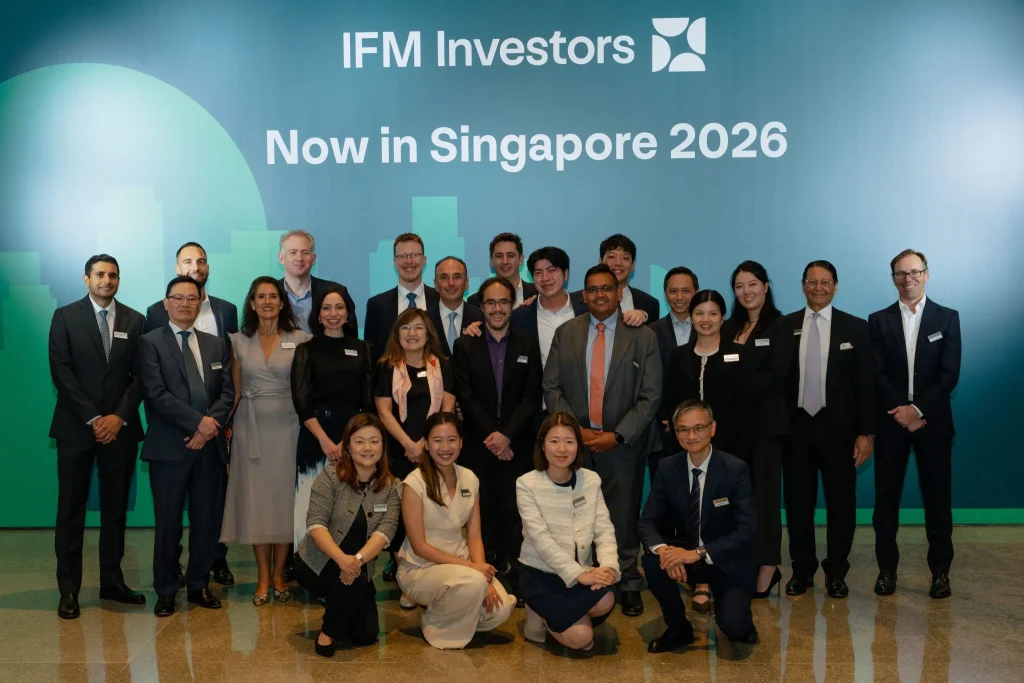
Global institutional investor and asset manager; IFM Investors has opened a Singapore office as the A$291.6 billion ($204.8 billion) pension-owned asset manager expands private credit origination across Asia and prepares to direct a larger share of a roughly $1 billion credit strategy beyond its core Australian and New Zealand markets.
The Singapore launch gives Melbourne-based IFM a fourth Asian office alongside Hong Kong, Seoul and Tokyo and creates a local base for sourcing and executing private loans in South and Southeast Asia. IFM said the expansion is aimed particularly at diversified credit, where it sees financing gaps and underpenetrated private markets creating opportunities for institutional capital.
The move adds another large institutional manager to Singapore’s developing private credit ecosystem. For IFM, however, the significance extends beyond establishing another regional office: the manager is seeking to diversify a credit portfolio still heavily concentrated in Australia and New Zealand while using pension capital to finance Asian middle-market companies.
IFM plans to broaden $1 billion credit strategy
IFM’s regional expansion centers on a private credit fund of roughly $1 billion.
Hiran Wanigasekera, executive director and co-head of Asia-Pacific diversified credit at IFM, said the manager expects to allocate about 25% to 35% of the vehicle to Southeast and South Asia in the near term, with the proportion potentially increasing toward half of the portfolio.
Separately, IFM is targeting roughly $250 million to $300 million of debt deployment into businesses in South and Southeast Asia in the near term. The manager has already begun investing in companies across industries including manufacturing, industrials, services and renewable energy.
That geographic diversification is important because IFM’s existing private credit exposure remains predominantly concentrated in Australia and New Zealand.
Rather than replicating the sponsor-heavy direct-lending model prevalent in the United States, IFM describes Asia-Pacific private credit as a market characterized by bilateral, often non-sponsored loans to growing middle-market businesses. The manager argues that those characteristics can make regional credit complementary to existing U.S. and European private debt allocations.
IFM’s official Singapore office announcement said the location will provide local origination and execution capabilities while also supporting the firm’s efforts to raise institutional capital across Asian markets.
Australian government capital provides an anchor
The Singapore expansion follows a A$175 million commitment from the Australian government through Export Finance Australia to IFM’s Asia-Pacific private credit capabilities.
The capital was committed through Australia’s Southeast Asia Investment Financing Facility, or SEAIFF, an initiative linked to the government’s Southeast Asia Economic Strategy to 2040. The mandate targets businesses with growth potential across industrials, manufacturing, services, renewable energy, telecommunications and real assets.
The Australian government’s Southeast Asia financing partnership with IFM gives the manager an institutional capital base for expanding lending in markets where companies can face fewer financing options than borrowers in deeper U.S. or European capital markets.
For IFM, the arrangement also illustrates how public and pension-backed capital can be deployed through private credit strategies to finance cross-border economic development without relying solely on traditional bank lending or public bond issuance.
IFM is itself owned by pension funds and manages retirement capital for more than 880 institutional investors globally. Its A$291.6 billion in assets under management as of July 31 spans infrastructure equity and debt, private equity, private credit, real estate and listed equities.
Asia private credit expands from a smaller base
IFM’s decision to establish a Singapore origination hub comes as private credit managers increasingly look beyond North America and Europe for deployment.
The firm estimates Asia-Pacific private credit has expanded almost fourfold from a low base during the past 15 years. IFM argues that regional economic growth, underdeveloped private lending markets and corporate demand for flexible financing could support further expansion.
Asia-Pacific remains structurally different from the mature U.S. direct-lending market. Financing opportunities can vary sharply among jurisdictions, while differences in insolvency regimes, collateral enforcement, currency exposure and local banking systems make on-the-ground underwriting particularly important.
That helps explain the strategic value of the Singapore office. A local team can originate transactions directly, conduct borrower diligence and structure loans around jurisdiction-specific risks rather than relying primarily on transactions sourced from Australia.
PE NEWSWIRE recently examined the expansion of Asian private lending through Megha Engineering’s proposed $700 million private credit financing in India, where Davidson Kempner Capital Management, Elham Credit Partners and Värde Partners have been working on a potential financing structure for a large shareholder transaction.
The two situations illustrate different ends of the regional opportunity. The Megha financing could become a large bespoke acquisition loan, while IFM is building a broader platform for lending across sectors and middle-market businesses.
Singapore attracts private credit managers
Singapore has become an increasingly important operating base for alternative credit managers targeting Southeast Asia.
Sixth Street established an office in the city in 2025, while other private-market investors have also expanded their regional credit capabilities. Singapore offers managers proximity to Southeast Asian borrowers while functioning as a major regional center for institutional investors, private banks and global asset managers.
The location also gives IFM access to a market where private capital and financial-sector development are receiving active policy support.
PE NEWSWIRE recently covered Singapore’s S$220 million commitment to its latest fintech development program, another example of the city-state seeking to reinforce its role as a capital and financial-technology hub even as private investment activity has moderated.
For private credit managers, Singapore’s attraction is more directly tied to regional deal sourcing. Companies across Southeast Asia can require financing for expansion, acquisitions, capital expenditure and refinancing while lacking the depth of institutional leveraged-loan and high-yield bond markets available to comparable U.S. and European borrowers.
Private lenders can fill that gap with individually negotiated financing, but the opportunity comes with risks that can differ substantially by country.
Local origination becomes central to IFM’s strategy
IFM’s Singapore expansion therefore represents more than a distribution push for Australian pension capital.
The manager is building the infrastructure needed to originate loans locally in a fragmented Asian market. That is particularly important as global private credit managers search for diversification while competition and capital accumulation put pressure on spreads and lender protections in mature markets.
IFM itself has warned that parts of global private credit are showing signs of strain after years of strong inflows, with borrower bargaining power increasing and investor protections weakening in some markets.
Asia offers a different opportunity set, but not necessarily an easier one. Lending across emerging and developed Asian economies requires managers to price legal enforceability, currency risk, borrower governance and sector-specific volatility alongside conventional leverage and cash-flow analysis.
IFM believes those differences can provide diversification. Its research characterizes much of Asia-Pacific private credit as bilateral and non-sponsored, giving lenders exposure to borrowers and industries that may be underrepresented in Western direct-lending portfolios.