SpaceX Secures $40 Billion GPU Financing Led by Apollo and Goldman Sachs

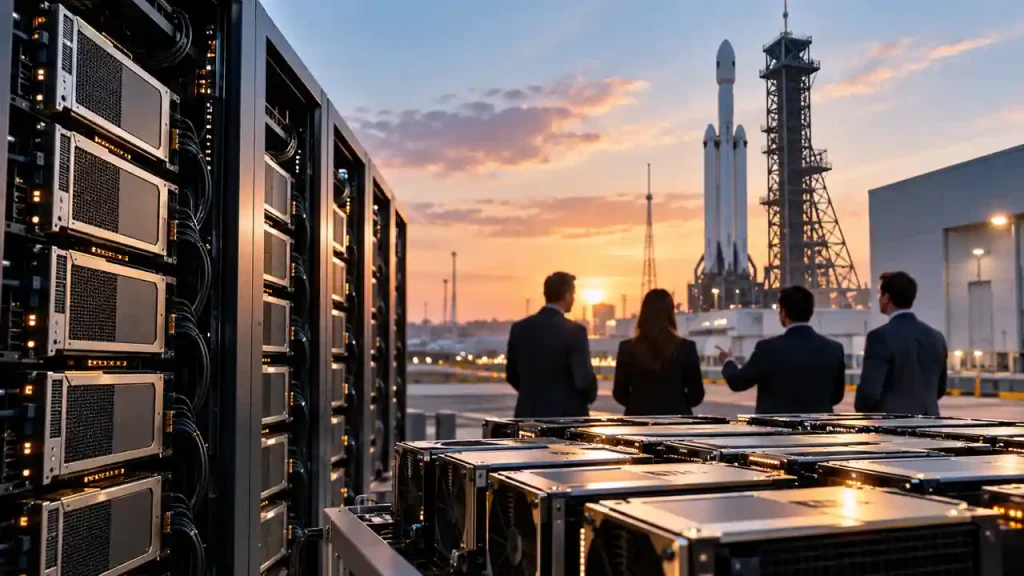
SpaceX has secured commitments for approximately $40 billion in artificial intelligence chip financing led by Apollo Global Management and Goldman Sachs, with BlackRock and KKR among the institutional investors backing the transaction.
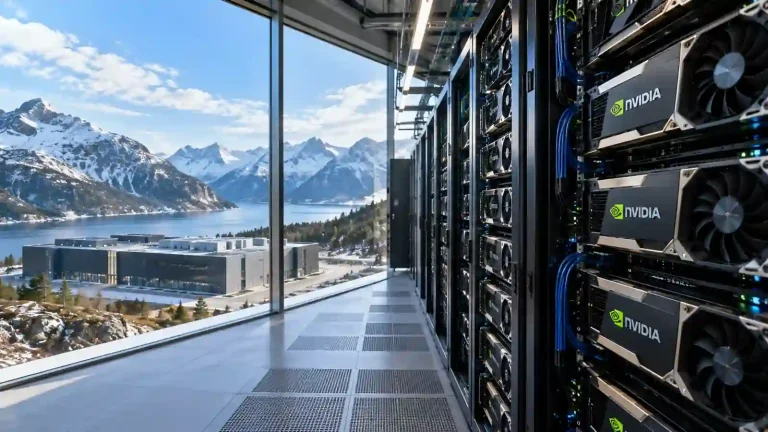
The agreement will finance Nvidia’s next-generation Vera Rubin graphics processing units (GPUs) and related equipment for SpaceX’s U.S.-based terrestrial computing infrastructure, including operations supporting its xAI business and Grok AI platform.
SpaceX describes the transaction as the largest committed GPU financing to date. The agreement is binding but remains subject to closing conditions, with completion expected before the end of 2026.
Apollo and Goldman Sachs Lead Institutional Financing
Under the arrangement, an entity managed by Apollo will purchase Nvidia processors and associated computing equipment before leasing the assets to SpaceX.
Goldman Sachs acted as sole structuring agent and co-led the financing commitments with Apollo. Funds and accounts managed by BlackRock and Goldman Sachs Asset Management, together with capital accounts advised by KKR, provided anchor commitments.
According to Apollo’s Oct. 26 transaction announcement, the financing will support SpaceX’s expansion of computing capacity for Grok and cloud services customers.
Rather than purchasing all equipment directly using corporate cash, SpaceX will obtain access to the hardware through a series of finance leases.
This structure allows large institutional investors to fund specialized technology assets while receiving contractual payments from the operating company.
Five-Year Lease Structure Links Repayment to GPU Deliveries
The financing will be deployed as equipment is delivered, with individual lease schedules expected to begin during the first half of 2027.
Each lease will run approximately five to 5.25 years. SpaceX will make quarterly payments generally comprising 5% of the financed equipment cost, interest calculated at a fixed annual rate on the outstanding balance and certain additional expenses.
The 5% component represents scheduled principal repayment, not the transaction’s interest rate. The fixed financing rate has not been publicly established, making it premature to calculate SpaceX’s total borrowing cost.
The approximately $40 billion commitment also should not be confused with cash already disbursed or a completed $40 billion equipment purchase.
Private Credit Expands Into AI Computing Assets
The transaction builds on Apollo’s involvement in large-scale AI infrastructure financing.
In June, Broadcom, Apollo and Blackstone announced a multibillion-dollar financing platform designed to fund AI processors and computing infrastructure.
PE NEWSWIRE previously examined the Broadcom, Apollo and Blackstone $35 billion AI infrastructure platform, which uses structured financing to connect institutional capital with AI hardware deployment.
The SpaceX transaction differs in its use of a master finance lease directly supporting a large corporate lessee.
It also comes as banks compete for GPU-backed financing mandates. PE NEWSWIRE recently reported on JPMorgan’s proposed $5 billion Volta AI infrastructure loan, involving Nvidia processors and a Norwegian data center.
Together, the transactions demonstrate that AI infrastructure financing is developing across private credit, bank-arranged loans and equipment leasing rather than through a single funding channel.
Credit Quality and Equipment Risk Remain Central
The scale of the SpaceX agreement creates substantial exposure to assets with relatively short technology replacement cycles.
GPU performance, resale values and demand for AI computing capacity can change materially during a five-year financing period.
Investors must therefore assess not only the equipment but also the lessee’s ability to meet contractual payments.
SpaceX benefits from revenue sources beyond AI infrastructure, including Starlink satellite communications and launch services. That business diversification distinguishes it from computing providers whose revenue depends predominantly on GPU rental contracts.
Following the announcement, Fitch Ratings said SpaceX’s BBB+ credit rating would remain unchanged, according to reporting on the agency’s assessment. Fitch indicated that the financing was already reflected in its credit forecasts and that it would monitor lease-adjusted leverage as a supplemental measure. Fitch By Investing.com
The distinction is important: a finance lease creates substantial future payment obligations even when a rating agency does not treat the entire lease balance as conventional financial debt in its primary leverage calculation.
Institutional Investors Gain Exposure to AI Infrastructure
The financing provides Apollo and participating institutional investors with exposure to AI computing infrastructure through contracted lease payments rather than direct ownership of an AI software business.
For SpaceX, the arrangement provides a funding channel for an equipment-intensive expansion while preserving flexibility over how computing assets are deployed.
The transaction’s ultimate economics will depend on final pricing, equipment delivery, utilization and the durability of demand for AI computing services.
As confirmed in Kirkland & Ellis’ transaction disclosure, the financing is expected to close by year-end, with lease schedules commencing in 2027.
The commitment establishes a major new benchmark for institutional financing of AI hardware, although the assets and associated payment obligations will be deployed over time rather than all at once.