

JPMorgan Markets $5 Billion Volta AI Infrastructure Loan at 11% Yield

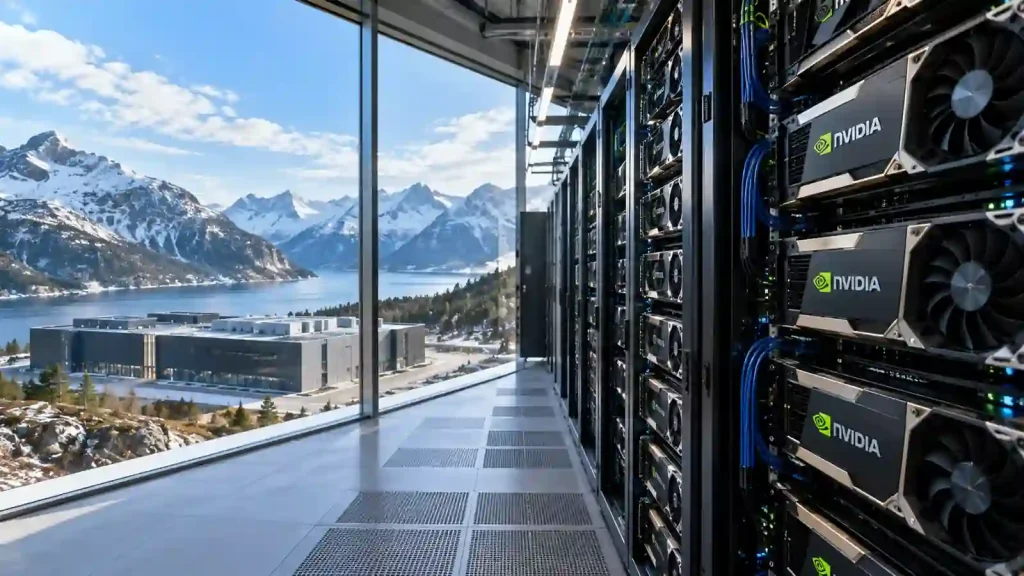
JPMorgan Chase is marketing a $5 billion leveraged-loan package for Volta AI Infrastructure Holdings, offering investors an estimated yield of approximately 11% to finance Nvidia graphics processing units and lease-related obligations at an artificial intelligence data center in Norway.
The financing, launched in October 2026, comprises a $3.7 billion loan for approximately 36,000 Nvidia GPUs and a $1.3 billion tranche supporting a letter of credit tied to Volta’s long-term data center lease with Bitdeer Technologies Group.
The transaction provides a significant test of institutional demand for debt backed by AI computing infrastructure. It also illustrates the financing costs facing newer cloud infrastructure companies as they compete with established technology groups for computing capacity.
Unlike conventional corporate borrowing, the package combines financing for specialized hardware with collateral supporting contractual property obligations.
The proposed 11% yield is particularly important for private-credit investors because it reflects the premium lenders are seeking for exposure to an emerging infrastructure business, specialized computing assets and long-term contractual arrangements.
$5 billion financing split between GPUs and lease support
The proposed debt is being raised through Volta Tydal Holdings S.à r.l., a special-purpose borrowing entity.
The financing consists of two components:
| Financing component | Amount | Intended purpose |
|---|---|---|
| GPU financing | $3.7 billion | Purchase approximately 36,000 Nvidia GPUs |
| Lease credit support | $1.3 billion | Cash collateral for a letter of credit supporting the Bitdeer lease |
| Total | $5 billion | AI computing infrastructure and lease obligations |
JPMorgan is marketing the debt at a spread of approximately 625 to 650 basis points over the benchmark rate, with an issue price of 97 to 98 cents on the dollar.
Those terms imply a yield of roughly 11% under prevailing market conditions, according to Bloomberg’s Oct. 5 reporting.
The package is structured as a strip, requiring participating lenders to purchase portions of both tranches rather than selecting only the GPU financing or lease-support component.
The debt is also expected to amortize over its life, meaning principal would be repaid progressively instead of being due entirely at maturity.
This repayment structure is particularly relevant for GPU financing because the underlying equipment can depreciate rapidly as newer generations of AI processors become available.
A lender presentation was held Oct. 5, with commitments reportedly due Oct. 14.
The financing is being marketed and has not been reported as fully syndicated or closed. The proposed yield and final allocation could change during syndication.
Bitdeer’s Norway data center anchors the transaction
The financing supports Volta’s agreement to use Bitdeer’s Tydal data center campus in Norway. Under the agreement announced Aug. 4, Bitdeer will provide 121 megawatts of critical IT capacity, supported by approximately 133 megawatts of gross power capacity.
The initial lease runs for 16 years and represents approximately $4.7 billion in contracted revenue for Bitdeer. An eight-year renewal option could increase the total contract value to approximately $8 billion over 24 years.
According to Bitdeer’s official announcement of the Tydal lease, the facility will use Nvidia GPUs to serve a leading AI laboratory.
Bitdeer has not publicly identified that end customer in its announcement. The company also disclosed that Volta’s obligations were expected to be supported by letters of credit totaling approximately $1.3 billion, arranged through affiliates of JPMorgan and another major financial institution, subject to customary conditions.
That amount corresponds to the lease-support tranche in the proposed leveraged-loan package.
The distinction matters because the $1.3 billion is not additional capital for purchasing GPUs. It is intended to provide financial security for Volta’s obligations to the data center operator.
Bitdeer retains ownership of the Tydal campus, while Volta obtains access to the computing infrastructure required to serve its customer.
Why lenders are demanding an 11% yield
The proposed pricing places Volta’s financing among the more expensive large AI infrastructure loans currently being marketed.
According to Bloomberg’s reporting on JPMorgan’s Volta loan syndication, the transaction is being offered at a discount to face value, with spreads substantially above those available to stronger investment-grade borrowers.
The pricing reflects several credit considerations. First, Volta is a relatively new infrastructure company without the operating history of established cloud providers.
Second, the transaction involves specialized GPUs whose economic value depends on future demand, utilization and technological competitiveness.
Third, the borrowing structure depends on multiple contractual relationships, including the data center lease and agreements supporting the use of computing capacity.
These factors create risks that differ from those associated with traditional commercial real estate or utility infrastructure.
A data center building may have a long economic life, but the processors installed inside it can become less competitive much sooner.
For lenders, this makes repayment schedules, equipment valuations, customer contracts and credit support especially important.
The 11% yield should not be interpreted as Volta’s final all-in financing cost. Borrower expenses, fees and final transaction terms may affect its actual cost of capital.
Private capital expands AI infrastructure financing
Large alternative-asset managers have already established financing platforms designed to meet growing demand for AI computing capacity.
PE NEWSWIRE previously reported on the Broadcom, Apollo and Blackstone $35 billion AI infrastructure platform, which combines semiconductor technology and institutional financing to support large-scale AI deployment.
The comparison illustrates an important distinction in credit markets.
Transactions involving established technology companies and stronger corporate credit support may obtain financing on more favorable terms than newer infrastructure operators.
Volta’s proposed yield indicates that investors are differentiating between borrowers rather than treating all AI-related debt as equivalent. The financing also demonstrates how commercial banks can originate and distribute specialized credit exposure to institutional investors.
JPMorgan’s role in marketing the package gives loan investors an opportunity to assess an emerging asset class through the leveraged-finance market.
For private-credit managers, such transactions may offer attractive yields but require technical expertise beyond conventional corporate lending.
Assessing a GPU-backed loan can involve evaluating processor performance, replacement cycles, customer concentration, data center power availability and equipment resale values.
Norway project links AI financing to long-term infrastructure investment
The Tydal campus also illustrates how AI development is creating investment opportunities in energy-intensive digital infrastructure.
Bitdeer expects the facility to operate using renewable electricity, with a targeted power usage effectiveness ratio of approximately 1.1.
Power usage effectiveness measures the relationship between a data center’s total energy consumption and the electricity consumed by its computing equipment. Lower ratios generally indicate greater operational efficiency.
For infrastructure investors, access to reliable electricity and efficient cooling can influence project economics and competitiveness.
Norway offers a potential advantage through its renewable power resources and cooler climate, although project returns still depend on electricity costs, equipment performance and customer demand.
Institutional investors are increasingly seeking exposure to these characteristics.
PE NEWSWIRE has also covered CPP Investments’ $1.75 billion commitment to EQT-led AI data center expansion, illustrating the role of pension capital in financing digital infrastructure.
That investment differs from Volta’s leveraged-loan package, but both reflect the substantial external capital required to develop AI computing capacity.
October syndication will test lender demand
The immediate question is whether JPMorgan can place the full $5 billion package at the proposed terms.
The reported Oct. 14 commitment deadline provides a near-term test of institutional appetite for AI infrastructure debt offering double-digit yields.
Successful syndication would demonstrate demand for financing structures combining GPU purchases with long-term data center obligations.
However, the pricing also shows that access to capital is not necessarily inexpensive, even for businesses operating in one of the fastest-growing technology markets.
For Volta, the economics will depend on whether revenue from computing services can support operating expenses, lease commitments and scheduled debt repayments.
For lenders, the key considerations include customer creditworthiness, contractual protections, hardware depreciation and the pace at which financed equipment generates cash flow.
The transaction therefore offers a useful benchmark for a rapidly developing segment of leveraged finance.
Volta’s $5 billion loan is not simply a bet on demand for Nvidia chips. It is a test of whether long-term AI computing contracts can support large amounts of debt against equipment that may become technologically outdated well before the surrounding infrastructure reaches the end of its useful life.