
Philippine Alternative Lending Heads for $2.34 Billion as Digital Finance Expands

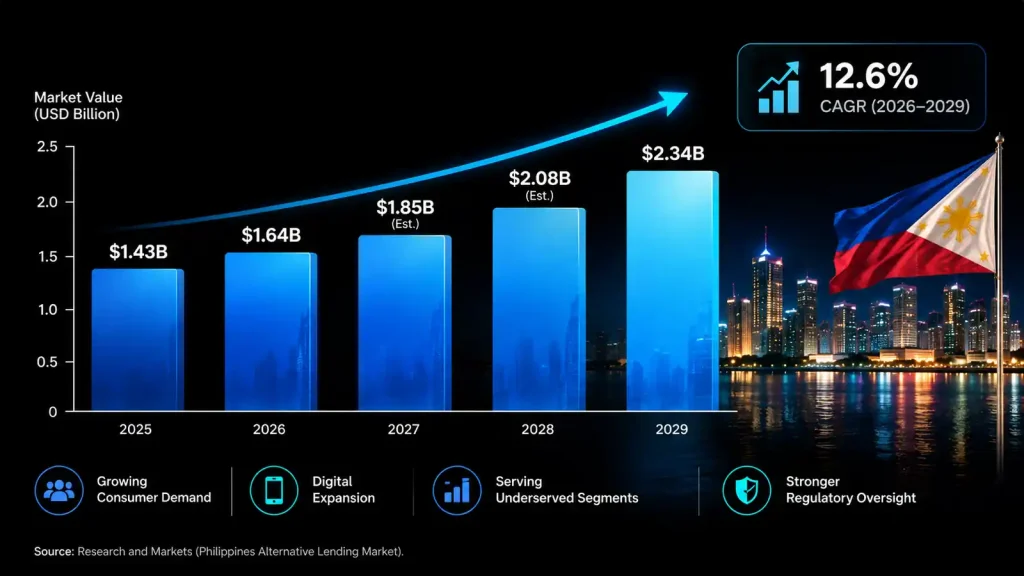
The Philippines’ alternative lending market is projected to reach $2.34 billion by 2029, expanding from $1.43 billion in 2025 as digital distribution and demand for financing outside traditional banks support continued credit growth.
Research and Markets expects the market to grow 14% in 2026 to $1.64 billion, followed by a compound annual growth rate of 12.6% from 2026 through 2029. The forecast implies an increase of roughly 43% from the projected 2026 level and about 64% from 2025.
Alternative lending expands from a $1.43 billion base
The Philippine market has already been expanding at a double-digit pace. Alternative lending recorded a 14.1% CAGR between 2020 and 2025, according to Research and Markets.
The research firm’s Philippines alternative lending market forecast covers peer-to-peer marketplaces, balance-sheet lending, invoice trading, real estate crowdfunding and other financing models. It also tracks retail and small- and midsize-enterprise borrowers.
The expansion is occurring alongside broader digitization of Philippine financial services. The Bangko Sentral ng Pilipinas’ 2025 Consumer Finance and Inclusion Survey showed formal lenders overtook informal sources of borrowing, while digital payments represented 64.69% of retail payments in 2025, according to central bank data cited by Asian Banking & Finance.
That combination provides a larger addressable market for lenders capable of originating, underwriting and servicing loans digitally.
Credit demand creates opportunity — and underwriting risk
The growth forecast does not mean alternative lenders face an uncomplicated expansion.
Only 25% of Filipino adults had outstanding loans in 2025, down from 45% in 2021, according to the BSP survey. Among borrowers, 34% said they frequently had difficulty making payments, while 8% reported taking a new loan to repay an existing one.
The composition of borrowing also highlights the consumer-credit element of the market. About 32% of borrowers used loans for food and other basic needs, compared with 15% for education, 14% for healthcare and 9% for starting or expanding a non-agricultural business.
For alternative lenders and their capital providers, those figures make underwriting quality, borrower affordability and collections increasingly important as origination volumes grow.
The credit environment is also becoming more challenging. Philippine banks face moderately deteriorating asset quality in riskier segments including personal loans, credit cards and auto financing, while S&P Global Ratings expects pressure among lower-income households and SMEs.
Regulators tighten oversight of online lenders
Regulatory scrutiny is developing alongside market growth.
The Philippine Securities and Exchange Commission maintains registration and disclosure requirements for lending and financing companies and in July introduced updated guidelines covering the disclosure and recording of online lending platforms.
The SEC’s lending and financing company regulatory framework also includes lists of recorded online lending platforms and revoked or suspended lenders, giving the regulator a framework for distinguishing authorized operators from unregistered platforms.
For institutional capital, stronger oversight could become increasingly important if the market attracts more funding from private credit managers, fintech investors and regional financial institutions.
Asia’s private lending opportunity broadens
The Philippine forecast also fits a wider expansion of non-bank lending across Asia.
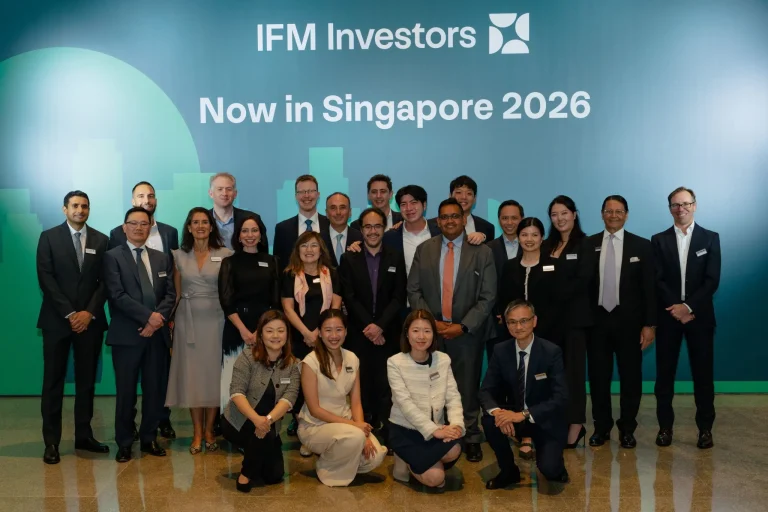
PE NEWSWIRE recently reported that IFM Investors is expanding Asian private credit origination from Singapore, with the pension-owned manager targeting lending opportunities across Southeast and South Asia.
Unlike the mature U.S. direct-lending market, Asian private credit spans a broad range of financing models, from institutional corporate loans to fintech-enabled consumer and SME credit. Legal enforcement, borrower quality and regulatory frameworks can also differ substantially between jurisdictions.
Large transactions are emerging alongside the smaller-loan ecosystem. PE NEWSWIRE has separately covered Megha Engineering’s proposed $700 million private credit financing in India, demonstrating the range of capital needs attracting alternative lenders across the region.
For the Philippines, the projected rise from $1.43 billion in 2025 to $2.34 billion in 2029 represents a relatively small market by global private-credit standards. Its significance lies instead in the pace of expansion and the opportunity to provide financing to consumers and smaller businesses that may not be fully served by traditional banking channels.
If the 12.6% forecast growth rate is achieved, the next phase will test whether digital lenders can scale originations while maintaining underwriting standards — and whether the Philippines develops into a larger destination for institutional capital seeking alternative-credit exposure in Southeast Asia.