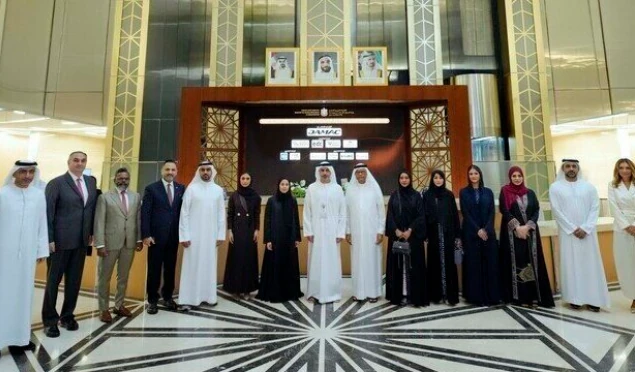
UAE Signs Seven Agreements With Italy, Scotland and Private Investors at Investopia Bridge 2026


Investopia Bridge 2026 concluded with seven investment and business cooperation agreements spanning venture capital, financial technology, advanced manufacturing and international capital markets, including a commitment by Global Ventures to allocate at least $1 million to companies participating in the UAE’s Future100 initiative.
The agreements, announced following the event at Park Hyatt Abu Dhabi on Saadiyat Island, involved government agencies, financial institutions and private-sector investors from the UAE and international markets. More than 800 participants attended the gathering, which brought together policymakers, asset managers, entrepreneurs and business executives.
The most immediately quantifiable investment commitment came from Global Ventures, which agreed to allocate a minimum of $1 million across one or more Future100 companies. Other agreements established cooperation frameworks rather than disclosed completed investments.
For institutional investors, the distinction is important: the seven agreements signal potential investment channels and business development opportunities, but the announcements did not disclose a combined transaction value or establish that all seven partnerships involve committed capital.
Global Ventures, Nuwa Capital and Carta back Future100
Three of the seven agreements involved Future100, a UAE initiative supporting emerging companies operating in sectors associated with the country’s economic diversification strategy.
Future100 signed separate memoranda of understanding with Global Ventures, Nuwa Capital and Carta.
Global Ventures’ commitment to allocate at least $1 million provides a direct potential funding channel for qualifying companies, although the announcement did not identify recipients, investment terms or deployment dates.
Nuwa Capital’s participation adds another private-investment relationship to the initiative, while Carta will provide eligible companies with a 25% discount on their first-year annual platform subscription, subject to applicable conditions.
The partnerships are designed to support fundraising preparation, company valuations, equity management, compliance and business development.
These services address practical challenges that emerging companies encounter when preparing for institutional financing.
For venture capital managers, reliable financial information, transparent capitalization tables and structured governance can improve the investment-readiness of potential portfolio companies.
The agreements could therefore support future fundraising activity beyond the specific $1 million allocation, although no additional investment commitments were disclosed.
UAE-Italy agreement targets advanced manufacturing and technology
One of the event’s most significant government-level agreements was signed between the UAE Ministry of Investment and Italy’s Ministry of Enterprises and Made in Italy.
The memorandum establishes a framework for cooperation in industrial development, advanced manufacturing, artificial intelligence, robotics, financial technology, biotechnology and life sciences.
The signatories were UAE Minister of Investment Mohamed Hassan Alsuwaidi and Italian Minister of Enterprises and Made in Italy Adolfo Urso.
The agreement could create opportunities for cross-border investors seeking exposure to technology-enabled manufacturing and industrial businesses.
However, the announcement did not specify investment volumes, participating companies or a timetable for transactions.
Separately, KEZAD Group and Scottish Enterprise agreed to establish a Scottish Energy Transition Centre in Abu Dhabi.
KEZAD will provide infrastructure and workspace for the initiative, which is intended to facilitate cooperation involving energy technology and the transition to lower-carbon economic activities.
For infrastructure and growth-equity investors, such cooperation could provide access to companies developing energy technologies or seeking international expansion. Any investment opportunities would depend on subsequent commercial agreements and project development.
Mastercard and China Securities International expand financial links
Two additional agreements focused on financial services and capital markets.
LuLu Money and Mastercard agreed to develop financial services for UAE small and medium-sized enterprises, combining business accounts, financial products and advisory capabilities.
The initiative targets a segment of the market where access to financing, payments infrastructure and financial management tools can influence business expansion.
Investopia also signed an agreement with China Securities International to promote cooperation in investment and capital markets.
The agreement coincided with the opening of China Securities International’s UAE office, described as its first international office outside China.
The development adds a potential institutional connection between Chinese financial markets and the UAE’s investment ecosystem.
The UAE’s broader private-capital market already includes major sovereign investors operating internationally. PE NEWSWIRE recently examined the Abu Dhabi Investment Council’s expansion of its private equity leadership, including its appointment of a Canadian pension investment veteran to oversee the asset class.
The China Securities International agreement differs from a direct investment transaction. Its significance lies in establishing a framework for future cooperation rather than announcing a completed capital deployment.
HAL platform targets SME financing and technology
Beyond the seven agreements, Investopia Bridge 2026 featured the launch of HAL, a UAE-based initiative intended to improve access to financial and technology services for smaller businesses.
HAL was developed by SC Ventures, Mashreq’s New Ventures and LuLu Financial Holdings, with Beehive, Microsoft, Visa and Aramex participating as strategic partners.
The combination brings together banking, financial technology, digital infrastructure and logistics capabilities.
For private investors, SME-focused financial platforms can create opportunities across payments, lending, business software and embedded financial services.
The commercial significance of HAL will depend on adoption, product availability and the extent to which participating businesses obtain financing or other measurable benefits. The launch announcement did not disclose a valuation, funding round or projected transaction volume.
The initiative also reflects a broader emphasis on supporting financial technology adoption.
A comparable policy-driven effort was examined in PE NEWSWIRE’s coverage of Singapore’s S$220 million financial technology investment program, which focuses on technology deployment, AI applications and financial infrastructure.
Private credit and alternative assets enter the discussion
Investopia Bridge 2026 also addressed changes in institutional asset allocation.
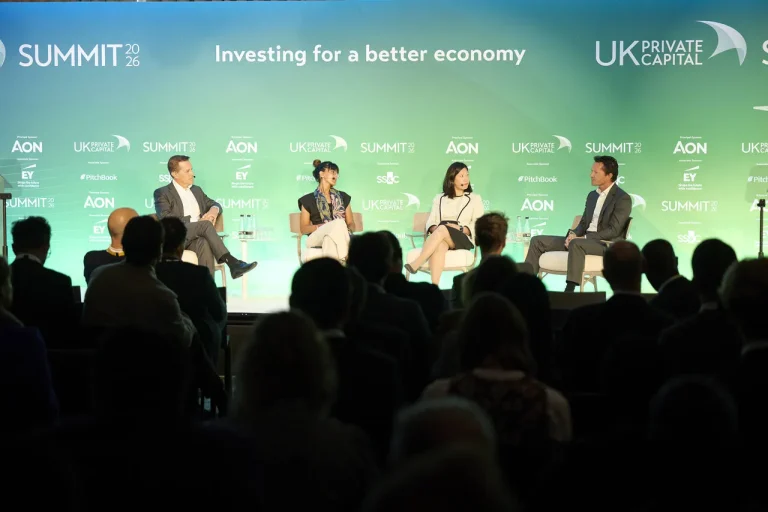
One session examined emerging investment categories, including private credit, infrastructure, tokenized assets, digital finance and venture capital.
Participants included PIMCO Managing Director Jamil Baz and Premji Invest CEO T.K. Kurien, according to the event’s official session coverage published by Emirates News Agency.
These discussions are relevant to private-market managers because the UAE serves as both a destination for investment and a source of institutional capital.
Private credit and infrastructure financing can support businesses and projects that require longer-term capital than traditional bank lending or early-stage venture investment typically provides.
Tokenized assets and digital financial infrastructure may also change how certain investment products are distributed and administered, although adoption remains dependent on regulation, investor demand and operational arrangements.
The event included 10 panel discussions and eight roundtables addressing subjects such as UAE-UK investment links, UAE-Uzbekistan opportunities, family offices, digital assets, impact investing and the commercialization of emerging technologies.
Seven agreements, but investment outcomes remain to be measured
The event also introduced the China-Arab Business and Investment Report 2026, developed by Investopia and the Sino International Entrepreneurs Federation with support from HSC Asset Group.
The report is intended to examine business conditions and investment opportunities across Chinese and Arab markets.
Future100 separately introduced research tracking participating companies and their development.
For investors evaluating the event’s outcomes, the most useful distinction is between signed cooperation frameworks and capital that has been formally committed or deployed.
Of the seven agreements, Global Ventures’ minimum $1 million allocation provides the clearest disclosed investment commitment. The other partnerships establish commercial, institutional or technical cooperation arrangements whose financial outcomes have not yet been quantified.
Investopia’s next flagship conference is scheduled for March 2027 in Abu Dhabi.
By then, the measurable indicators will include whether Future100 companies have secured financing, whether the international partnerships have produced investment transactions, and whether new financial services initiatives have attracted business customers.
For the UAE’s private-capital ecosystem, those outcomes will provide a clearer measure of Investopia Bridge 2026’s investment significance than the number of agreements signed.