UAE Enlists 11 Private Companies to Support Labour Market Programs

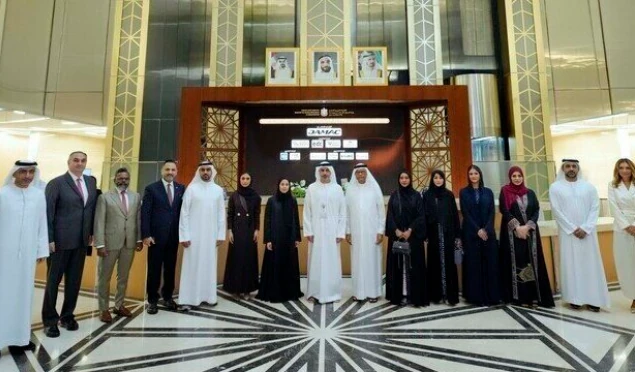
The UAE Ministry of Human Resources and Emiratisation has signed sponsorship agreements with 11 private-sector companies, including DAMAC Properties, Majid Al Futtaim Group, NMDC Energy and Al Ansari Exchange, expanding corporate participation in government programs aimed at workforce development and labour-market competitiveness.
The agreements cover the Emirates Labour Market Award as well as worker-focused events held around national and international occasions and other ministry activities. The partnerships come as the UAE seeks to deepen cooperation between government and employers while positioning the country as a destination for investment, skilled workers and new-economy businesses.
DAMAC takes top sponsorship tier
DAMAC Properties is the sole Diamond Sponsor under the agreements, according to the Emirates News Agency announcement.
Binghatti Group, Emirates General Petroleum Corporation, known as Emarat, the Insurance Pool and Electronic Document Centre are Platinum Sponsors.
The Gold tier comprises Al Ansari Exchange, SkyBlue Media, Majid Al Futtaim Group and NMDC Energy, while AW Rostamani Group and Emirates Integrated Telecommunications Company, or du, are Silver Sponsors.
Mohammed Saqr Al Nuaimi, assistant undersecretary for support services at the Ministry of Human Resources and Emiratisation, signed the contracts with company representatives at the ministry’s headquarters in Dubai.
Financial terms and the value of the sponsorship commitments were not disclosed. The arrangements should therefore be viewed as corporate sponsorship and public-private cooperation rather than government procurement or private investment transactions.
Emirates Labour Market Award expands
A central beneficiary is the Emirates Labour Market Award, the UAE program recognizing companies and workers for practices spanning employment, workforce empowerment, occupational health and safety, innovation, talent attraction and social responsibility.
Participation has expanded sharply. The fourth edition attracted more than 33,000 applications, an increase of about 85% from the more than 18,000 applications submitted for the third edition in 2025.
The previous edition recognized 100 winners. Companies receiving awards could obtain benefits through the ministry’s establishment classification system, while individual workforce awards included cash prizes of as much as AED100,000.
The Ministry of Human Resources and Emiratisation sponsorship initiative extends beyond the award itself, covering activities for workers during holidays and major national and global occasions as well as internal ministry events.
The sponsorship structure provides companies with a formal role in initiatives that connect employers, workers and government institutions, while the ministry says the partnerships are intended to promote the exchange of labour-market practices and corporate social responsibility.
UAE combines private-sector growth with tighter oversight
The partnerships come alongside a broader effort to improve the operation and oversight of the UAE private-sector labour market.
During the first half of 2026, the ministry conducted approximately 212,000 inspections and reported a 15% year-over-year decline in the number of establishments violating labour-market legislation. Cases referred to public prosecutors fell 49% to 490 from 962 a year earlier.
The ministry has been using artificial intelligence, data analytics and risk indicators to target inspections. Authorities separately identified 377 cases of alleged fake Emiratisation across 266 private companies during the first six months of the year and said legal action had been taken against the companies involved.
The combination of employer partnerships and compliance enforcement is relevant to investors because labour availability, regulation and workforce policy form part of the operating environment for companies deploying capital in the UAE.
That backdrop accompanies significant growth in the country’s private-capital ecosystem. PE NEWSWIRE recently reported that UAE venture funding reached $1.3 billion in the first half of 2026, returning the Emirates to the top of the Middle East and North Africa market by funding value.
Institutional capital is also expanding from Abu Dhabi. The Abu Dhabi Investment Council’s appointment of a new private equity CIO reflects continued investment in the capabilities of the UAE’s more than $160 billion sovereign investment platform.
Labour policy becomes part of the investment environment
For private-market investors, the sponsorship agreements themselves are not a capital-markets event. Their relevance lies instead in the intersection between labour policy and the UAE’s broader effort to attract companies, capital and skilled workers.
The government is simultaneously expanding Emirati participation in private employment, tightening compliance monitoring and encouraging companies to participate directly in labour-market initiatives.
More than 177,000 Emiratis were employed across over 32,000 private-sector establishments by June 2026, according to the Emirati Talent Competitiveness Council, while approximately 58% of recent graduates were choosing private-sector careers.
For private equity, venture capital and infrastructure managers with UAE portfolio companies, those developments can affect recruitment, workforce planning, compliance costs and the availability of local talent.
The presence of companies spanning real estate, retail, energy, financial services and telecommunications among the 11 sponsors also demonstrates that the initiative reaches across several of the sectors attracting substantial private and institutional investment in the Emirates.
The sponsorship agreements therefore represent a relatively small but concrete component of a larger UAE strategy: using cooperation between government and major employers alongside regulation and workforce programs to strengthen the country’s private-sector operating environment.