
UN World Investment Forum 2026 Advances Private Capital Mobilization in Doha

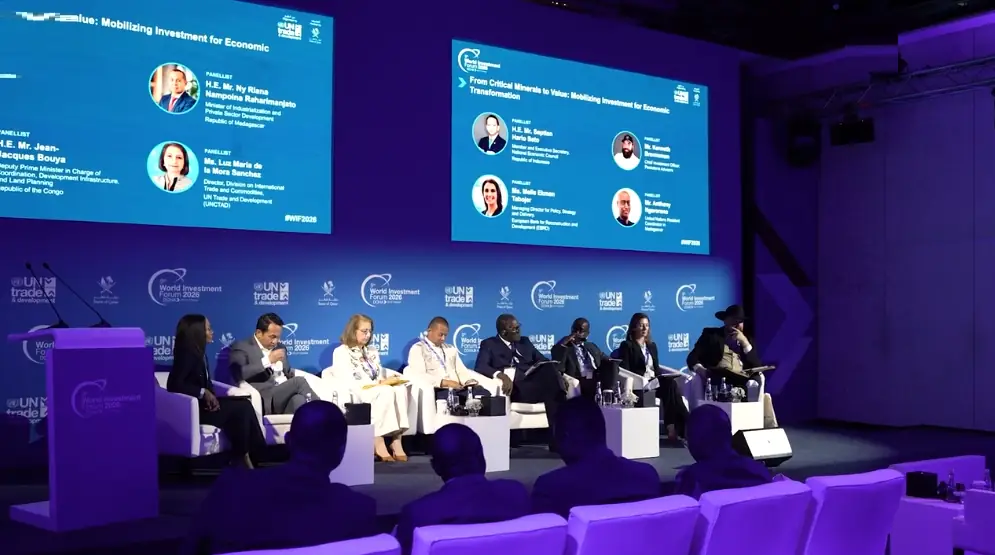
The United Nations World Investment Forum 2026 concluded in Doha, Qatar with new initiatives to mobilize private capital, expand infrastructure financing and reduce investment risks in developing economies.
Organized by UN Trade and Development (UNCTAD) and hosted by Qatar from, the three-day forum attracted more than 4,000 participants, including sovereign wealth funds, private equity investors, institutional asset managers and policymakers. The event produced the Doha Global Investment Action Framework, covering more than 20 outcomes across six priority areas.
Private Capital Mobilization Takes Center Stage
A major outcome was the proposed Global Initiative for Investment Risk Sharing, designed to make emerging-market projects more attractive to institutional investors.
The initiative seeks cooperation among governments, development finance institutions, investment insurers and private capital providers to address political, regulatory and financing risks.
Blended finance structures, guarantees and investment insurance could help improve project bankability, particularly in infrastructure and sustainable development.
According to UNCTAD’s official World Investment Forum outcomes, the organization also strengthened cooperation with the Berne Union on investment insurance and risk mitigation.
For private equity and infrastructure managers, these mechanisms could expand investment opportunities in markets where elevated financing costs and regulatory uncertainty constrain deployment.
However, the proposed framework does not represent a confirmed commitment of new private capital.
Sovereign Wealth Funds and Infrastructure Investment
Sovereign wealth funds featured prominently in discussions about financing long-term development projects.
The forum emphasized partnerships between institutional investors, development finance organizations and governments to support energy infrastructure, digital connectivity and economic diversification.
Such partnerships can combine private-sector investment expertise with public-sector risk mitigation and project development support.
PE NEWSWIRE’s coverage of the Broadcom, Apollo and Blackstone $35 billion AI infrastructure platform illustrates how private capital managers are developing large-scale investment structures for capital-intensive infrastructure.
For sovereign wealth funds, co-investments can provide direct exposure to strategic assets while allowing greater control over investment selection and costs.
AI Infrastructure and Emerging Markets
Digital infrastructure emerged as another priority, with UNCTAD, the International Telecommunication Union and World Bank expanding cooperation through the Digital Infrastructure Investment Catalyser.
The initiative aims to help developing economies identify investment requirements and prepare commercially viable infrastructure projects.
UNCTAD reported that announced data center investment in developing economies declined by $32 billion, demonstrating the challenges facing emerging markets in attracting AI-related capital.
The proposed Digital and AI Infrastructure Investment Playbook will provide additional guidance for low- and lower-middle-income countries.
Investment Policy Reform and Global Capital Flows
The forum also introduced guiding principles for reforming international investment agreements, alongside initiatives to improve regulatory transparency and cross-border investment procedures.
These measures respond to uneven global capital allocation. UNCTAD reported that more than 80% of global foreign direct investment in 2025 flowed to just 20 economies.
The organization’s investment research and policy initiatives provide additional context on international investment trends and development financing challenges.
PE NEWSWIRE previously examined EIG and Acwa’s proposed $4 billion U.S. power infrastructure investment platform, reflecting institutional interest in long-duration infrastructure assets.
What the Doha Framework Means for Private Markets
The Doha framework establishes a policy agenda rather than a fully funded investment program.
Its effectiveness will depend on whether governments and development institutions can convert proposed risk-sharing mechanisms into financeable projects that attract commercial investors.
For private equity firms, sovereign wealth funds and infrastructure managers, the central opportunity lies in accessing new investment pipelines while maintaining appropriate underwriting standards.
The forum’s longer-term significance will be measured by actual capital commitments, completed transactions and sustainable investment returns rather than policy announcements alone.